|
Ghana: People-to-People |
||
Dispatch 1 - Accra |
||
|
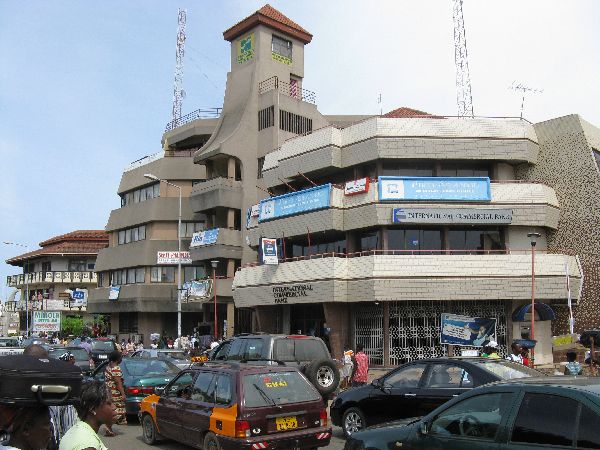
Arrive in Accra. In too many ways Accra seems to be a
city of missed opportunities; it has turned its back on the ocean, the land
use and infrastructure is neither pedestrian-friendly or bicycle-friendly,
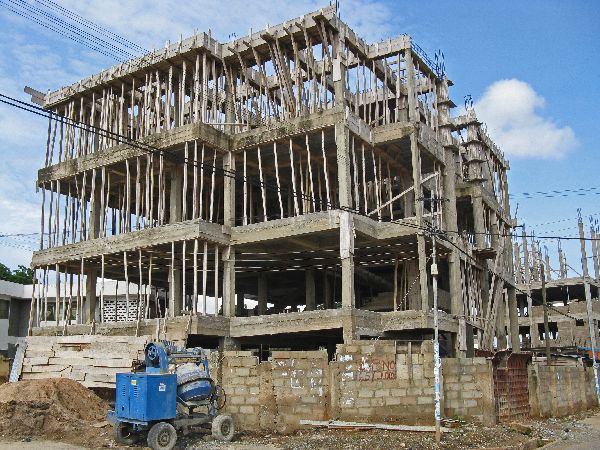
the architecture is generally plain and utilitarian and a Accra cultural
identity seems to be lacking, but it is friendly, hard working and a
comfortable place to be. |
||
|
Outside of customs a few men approach offering taxis and when I declined they offered to help me find my friend -- this was in fact a bit of a hustle because they would later want "a little something" for what amounted to an unneeded offer of assistance.
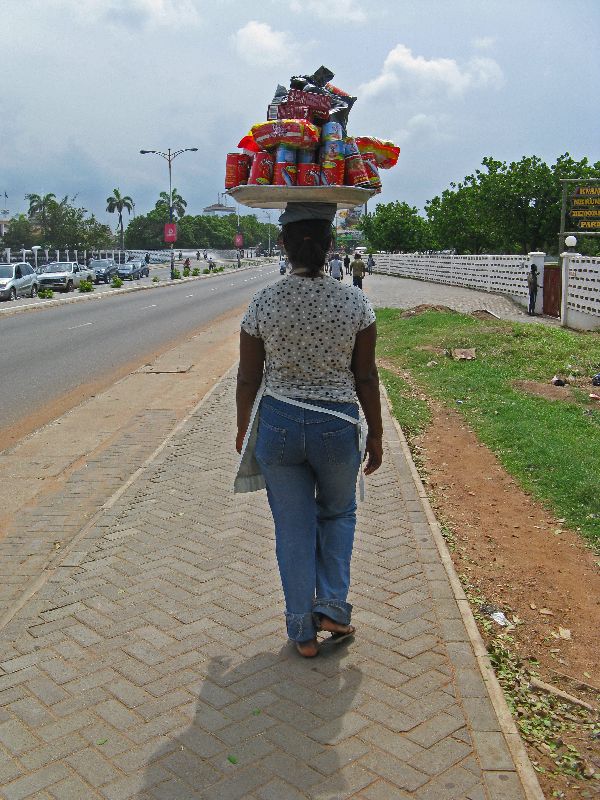
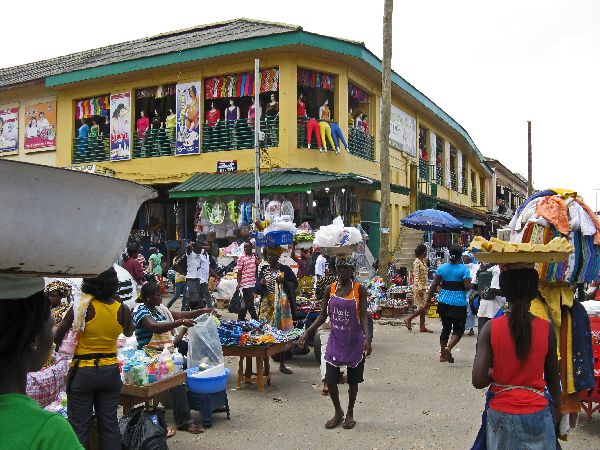
Along with the healthy economy comes a lot of vehicle traffic, road congestions and fumes. It doesn't quite inspire photography, so no pictures. Because of the gridlock, bicycles have a nice advantage for many trips in Accra. There are some alternative routes that work great for bicycles and escape the fumes, but they aren't terrible popular, yet.
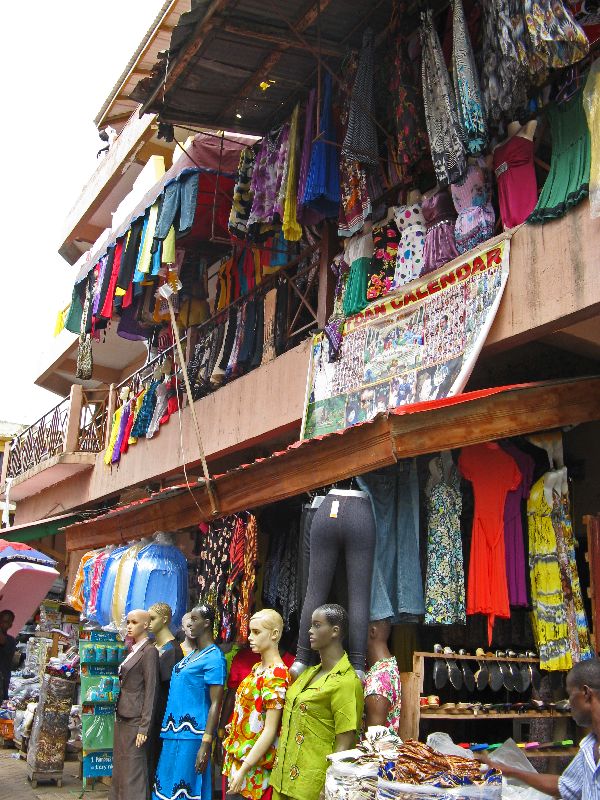
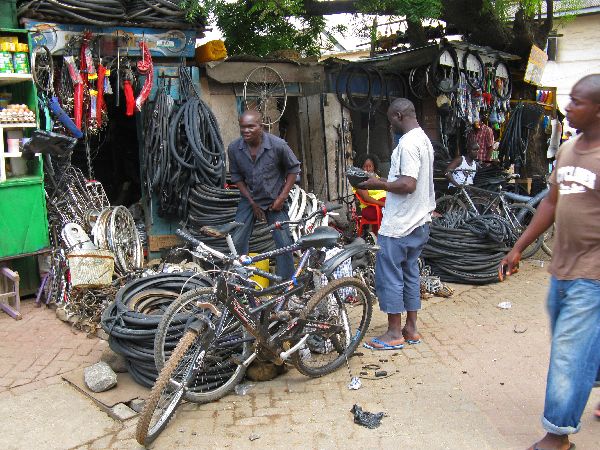
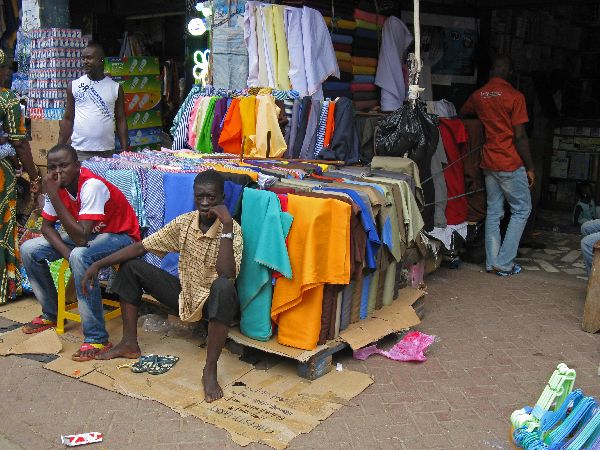
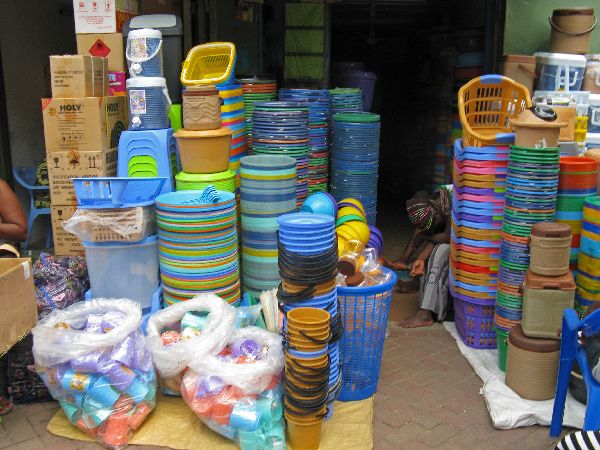
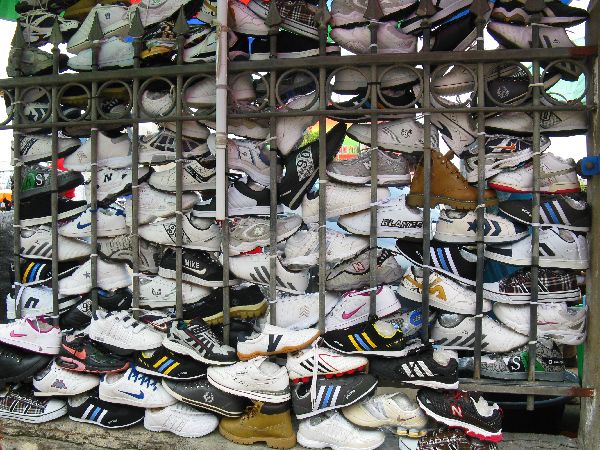
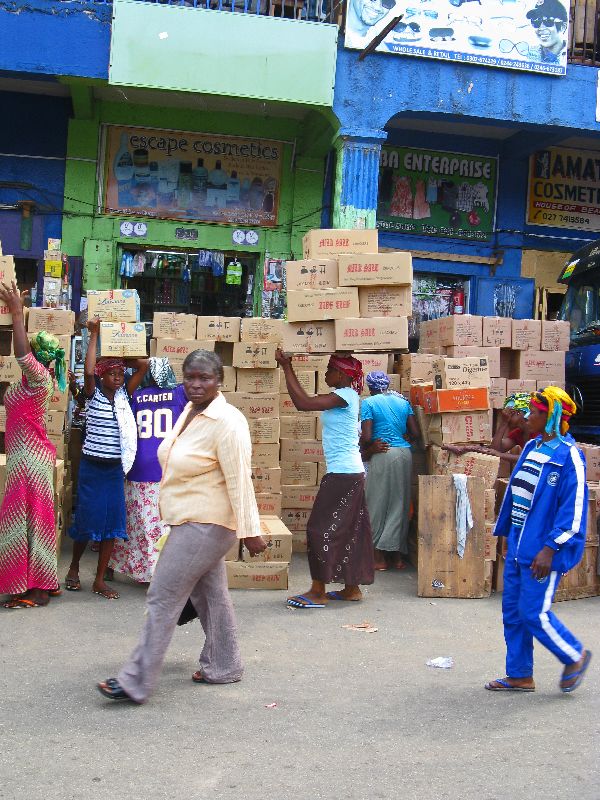
Even so new stock seems to arrive daily and after initially being stacked on the streets it is eventually squirreled away in the bowels of the buildings.
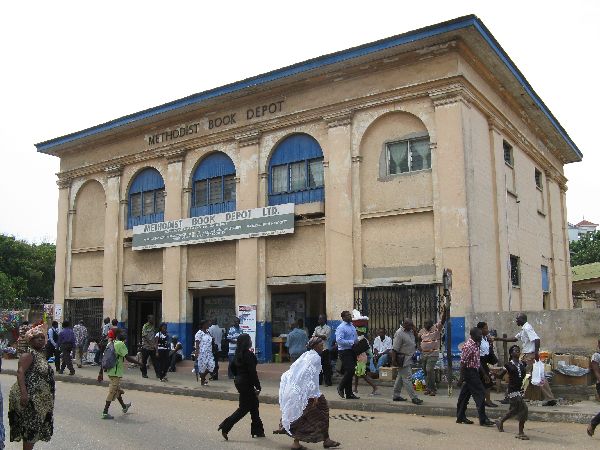
Accra doesn't highlight much of its old physical heritage. The colonizers
started building on some of the fort-sites in the 1600's. The best of
these is Osu Castle, which is out-of-bounds to the public. The oldest of
the modern buildings is the Methodist Book Depot, which dates
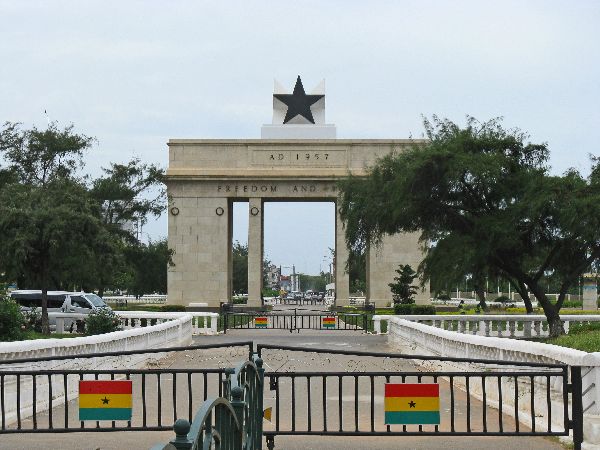
Independence Square, mostly a huge bare asphalt parade ground with viewing stands, was build
in the 1960's, after independence in 1957. The square is used for many
national celebrations, but is empty and lifeless most of the time.
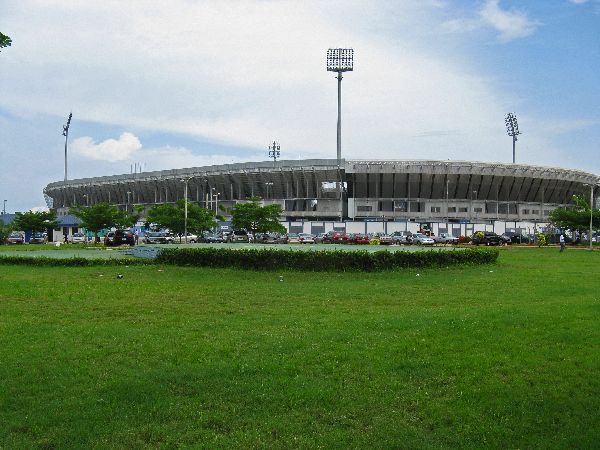
Adjacent to the square is the Accra Sport Stadium, host to 1978 and 2008 World Cup qualifying matches. In May, 2001, it was the site of a tragic stadium stampede that killed 126 sports fans. It was renovated in 2007 to meet FIFA standards.
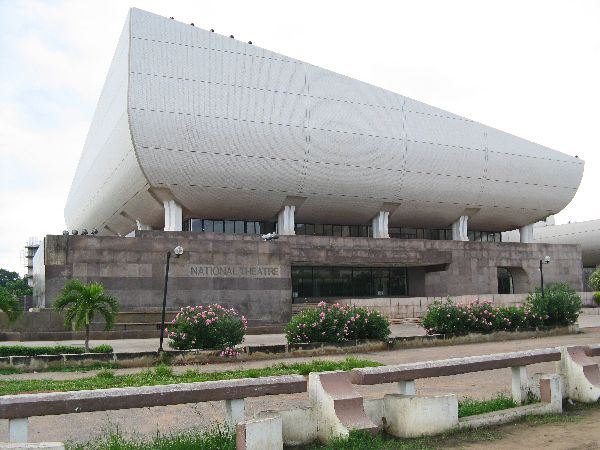
The somewhat pagoda-like National Theatre, built with the help of the Chinese was opened in 1992. In addition to large interior spaces there is a FolksPlace outdoor theatre and a Chinese Garden for receptions.
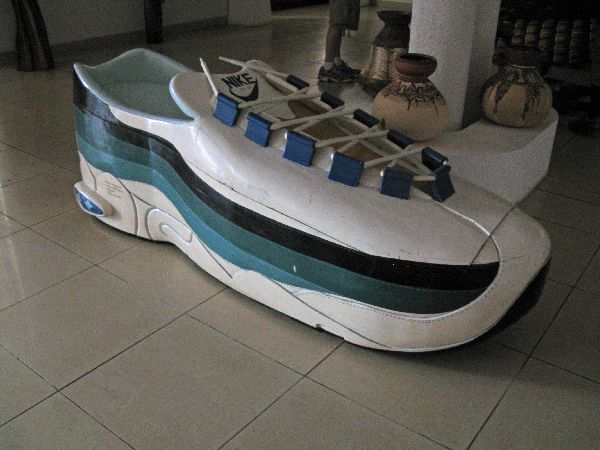
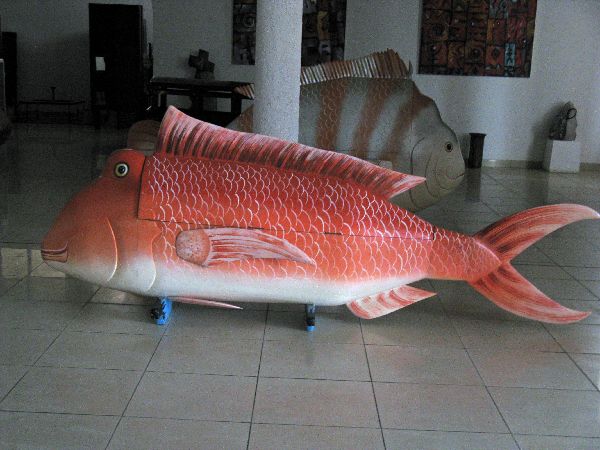
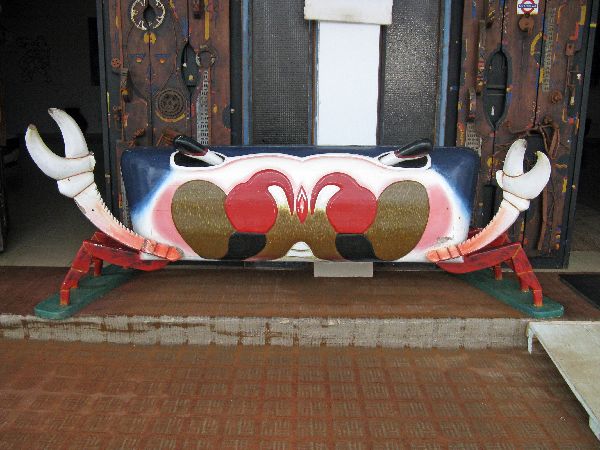
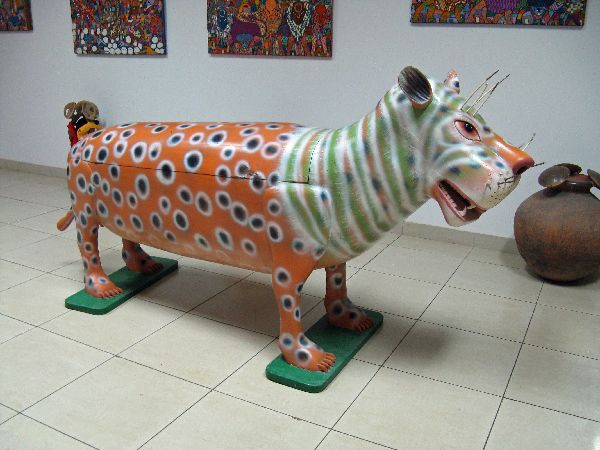
Along
the coast, on the road to La Beach, is the Artists' Alliance Building. It
is three stories of traditional West Africa arts
|
Addendum: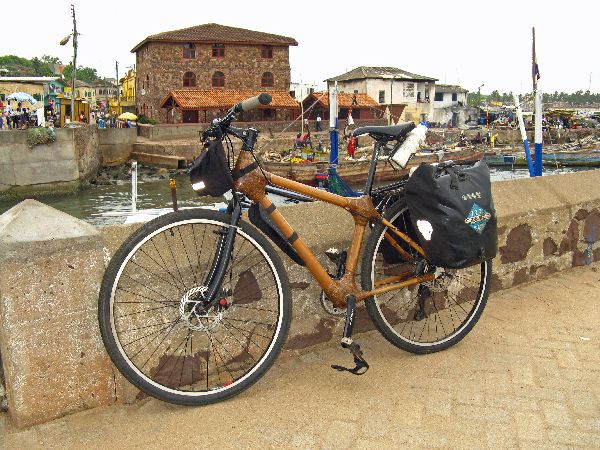 500 kilometers of one of our Ghana bike tours was ridden on a Ghanaian made bamboo bike. The frame functioned flawlessly. It is a soft enough ride that vibrations are transferred from the road to the riders body, and the frame is stiff enough to be very efficient. The photo above is the bicycle loaded near the end of the tour. It was a conversation piece every day of the tour with the Ghanaians we met. When we explained that the frames were manufactured in Ghana the first reaction was generally, "No way!" It took some persuading to erode the doubt and skepticism but when that was done there was a lot of pride and smiles. |
|
|
|
||
|
||
|
Unique Programs To Special Places For Memories Of A Lifetime!
 Bicycle
Africa Homepage
Ibike Programs
IBF Homepage
To
Search Bicycle
Africa Homepage
Ibike Programs
IBF Homepage
To
Search
"Hosted by
DreamHost - earth friendly web hosting"
|
||
 |
|
|



 Please
write
Please
write