El
Corazon de Cuba
Educational Program
Cienfuego
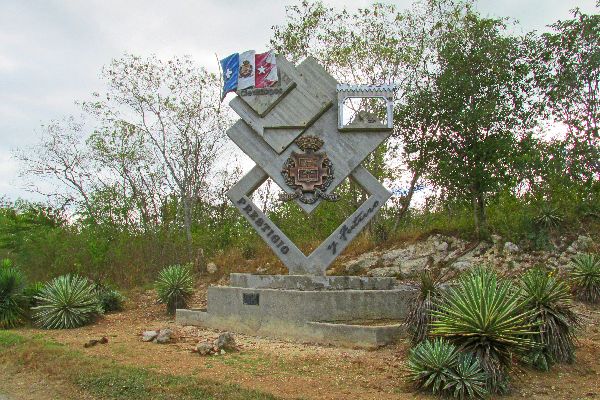
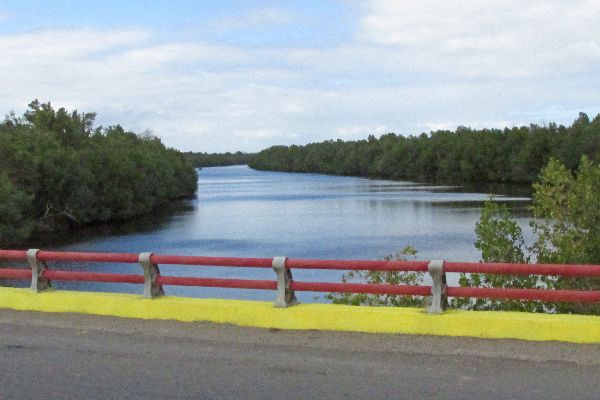 Cienfuego is
built on an inland harbor that is fed by a number of rivers. The bay is connected to the Caribbean by a
narrow channel. The outer shore
alternates between rocky promontories and white sand beaches. Off shore from the beaches
you can snorkel and swim out to reefs for a variety of tropical fish viewing
opportunities.
Castillo Jagűay, built by the Spanish, overlooks the channel.
Its purpose was to protect Cienfuego from attacks by pirates and Corsairs. It
has long since been decommissioned as a fort, and like so many 16th, and 17th century
forts, this one did a stint as a prison and is now a museum.
Cienfuego is
built on an inland harbor that is fed by a number of rivers. The bay is connected to the Caribbean by a
narrow channel. The outer shore
alternates between rocky promontories and white sand beaches. Off shore from the beaches
you can snorkel and swim out to reefs for a variety of tropical fish viewing
opportunities.
Castillo Jagűay, built by the Spanish, overlooks the channel.
Its purpose was to protect Cienfuego from attacks by pirates and Corsairs. It
has long since been decommissioned as a fort, and like so many 16th, and 17th century
forts, this one did a stint as a prison and is now a museum. 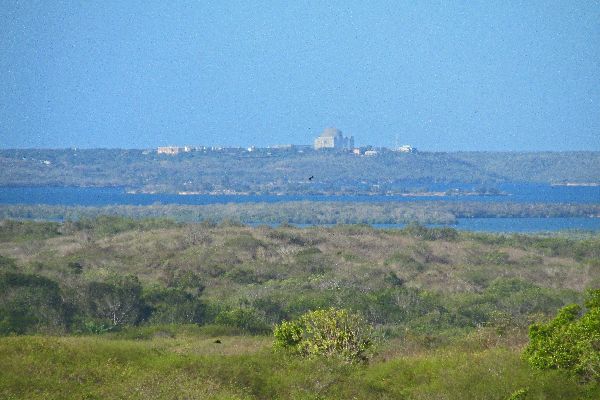 On the
skyline of the outskirts of Cienfuego is the reactor containment building
for Cuba's only nuclear power plant -- standing half completed and
with no significant
progress having been made since the Soviet Union collapsed and funding disappeared in 1990.
The power plant is said to use the same design and technology as Chernobyl,
which might explain some reluctance to reengage the project.
On the
skyline of the outskirts of Cienfuego is the reactor containment building
for Cuba's only nuclear power plant -- standing half completed and
with no significant
progress having been made since the Soviet Union collapsed and funding disappeared in 1990.
The power plant is said to use the same design and technology as Chernobyl,
which might explain some reluctance to reengage the project.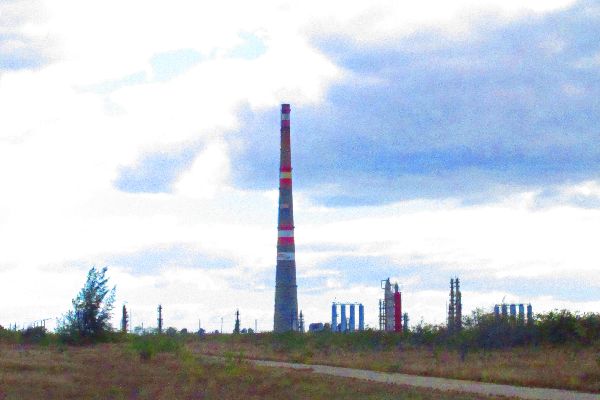 On
another side of the bay the Venezuelans have supplied Cuba with a large oil
refinery -- to handle Venezuelan crude oil. In another story of fall from
glory, as Venezuela's economy has imploded and the price of oil collapsed,
the Venezuelan's are less able to supply the rare material for the refinery.
On
another side of the bay the Venezuelans have supplied Cuba with a large oil
refinery -- to handle Venezuelan crude oil. In another story of fall from
glory, as Venezuela's economy has imploded and the price of oil collapsed,
the Venezuelan's are less able to supply the rare material for the refinery.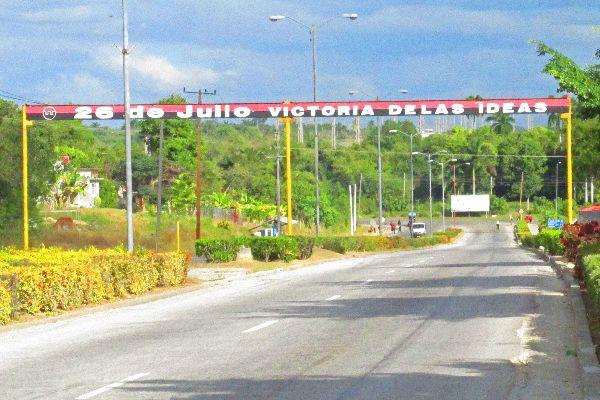
 The
banner over the road as you approach the city says "26 July Victoria of the
Ideas." This is a reference to July 26, 1953, when Fidel Castro lead and attack on the Moncada Barracks, in
Santiago de Cuba. It is considered "the beginning of a movement that has
changed the world forever."
The
banner over the road as you approach the city says "26 July Victoria of the
Ideas." This is a reference to July 26, 1953, when Fidel Castro lead and attack on the Moncada Barracks, in
Santiago de Cuba. It is considered "the beginning of a movement that has
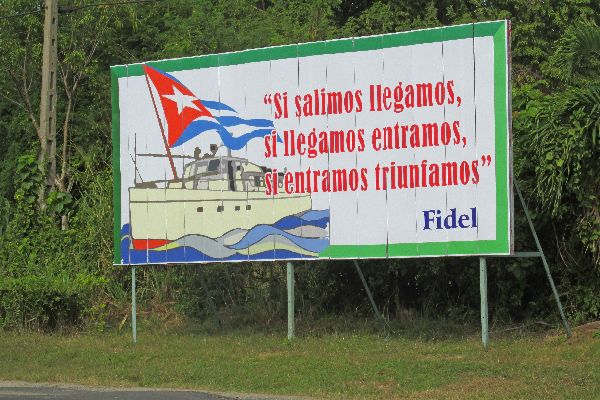
changed the world forever."The next sign reads, "If we go we arrive. If we arrive we enter. If we enter, we triumph."
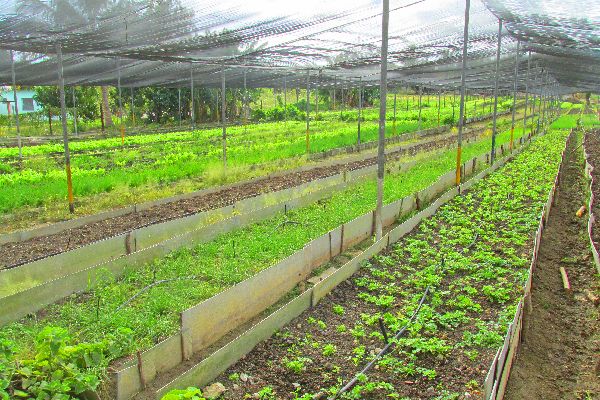
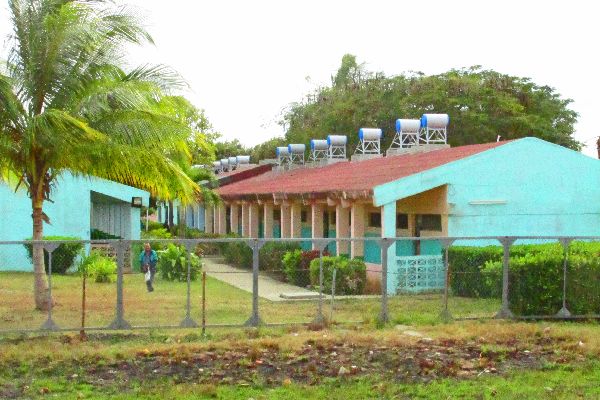
In contrast to the capital intensive attempt at nuclear and the oil refinery there are a few low-tech solar collectors on houses. Like most Cuban cities, there are urban "agroecological" organic vegetable farms in the town. Nationally, these urban farms are now able to produce more than half of the vegetables consumed in the cities. Not only do they zero-out the industrial fertilizers, pesticides and herbicides used, but the carbon-footprint of this produces is also negligible.
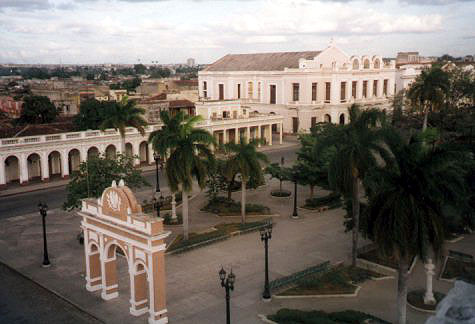 The town center of Cienfuego has a distinctly different feel
to it. According to a local guide we had this is because it is different. Unlike most of
Cuba, whose historic influence was Spanish, Ceinfuego was a French enclave. Cienfuegos,
founded in 1819, had been modeled on the French city of Bordeaux by a
group of determined,
multi-national colonists, mostly French. It was built around a spacious, beautifully-designed central
plaza, 200 meters on each side. In the 1990's, auto
traffic was banned from the entire central area, making it
peaceful and beautiful. People used the streets and the central plaza; children
played, couples walked, bicycles passed, seniors sat and talked. It was a wonderful urban space, as the planners like to say.
At some point this policy was reversed to the detriment of the quality of
ambience in the central plaza.
The town center of Cienfuego has a distinctly different feel
to it. According to a local guide we had this is because it is different. Unlike most of
Cuba, whose historic influence was Spanish, Ceinfuego was a French enclave. Cienfuegos,
founded in 1819, had been modeled on the French city of Bordeaux by a
group of determined,
multi-national colonists, mostly French. It was built around a spacious, beautifully-designed central
plaza, 200 meters on each side. In the 1990's, auto
traffic was banned from the entire central area, making it
peaceful and beautiful. People used the streets and the central plaza; children
played, couples walked, bicycles passed, seniors sat and talked. It was a wonderful urban space, as the planners like to say.
At some point this policy was reversed to the detriment of the quality of
ambience in the central plaza.
There is a car-free street leading off of the plaza, but it is so full of street furniture that it has a lot of unusable space and is very congested.
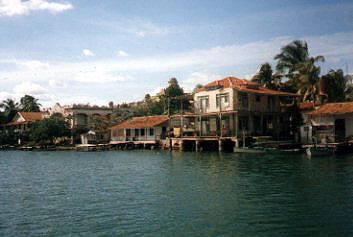 While
Cuban government is largely centralized in Havana, local municipalities have had
the ability to make some of it own decisions. One of Ceinfuego's decisions was to preserve
and maintain the city center, before this was popular in the central government. On the
side streets there are many potholes and the sidewalks need repair.
While
Cuban government is largely centralized in Havana, local municipalities have had
the ability to make some of it own decisions. One of Ceinfuego's decisions was to preserve
and maintain the city center, before this was popular in the central government. On the
side streets there are many potholes and the sidewalks need repair.One of the palatial houses on the square is now the Cultural Center. Students come here after school for dance, music and fine arts. At the age of eight, children who demonstrate musical talents may enroll in classes. The more agile are allowed to try out for dance classes. The most talented will be sent on to special schools, where they can study an instrument or dance through their high school years and into college. The Cultural Center, though it is a bit worn, when it is full of students practicing their routines it is full of life.
Also on the square are the theater and Cathedral. On Christmas Eve the music from the speakers at the Cathedral filled the square with songs like Silent Night. On other nights "Son" bands serenade the strollers.
Central Plaza: Statue of Jose Marti, Palacio Ferrer (Culture House), Thomas Terry Theatro, Church of Purisima Concepcion, City Hall, Union Hotel, Boulevard de Cienfuego. (the section is under construction).
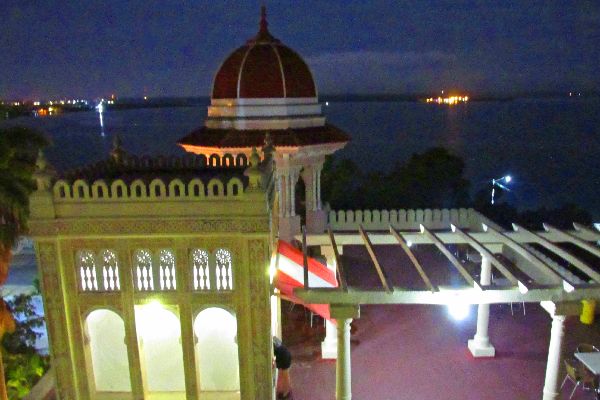
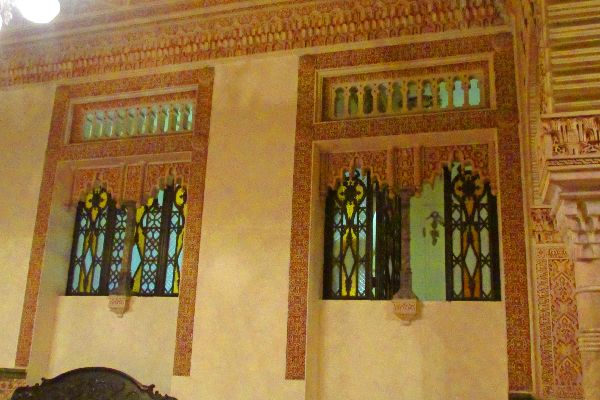
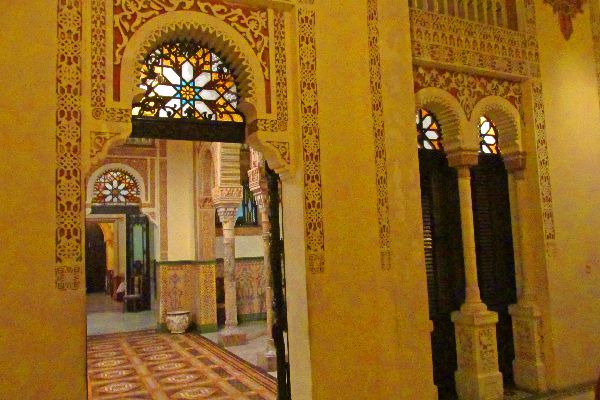
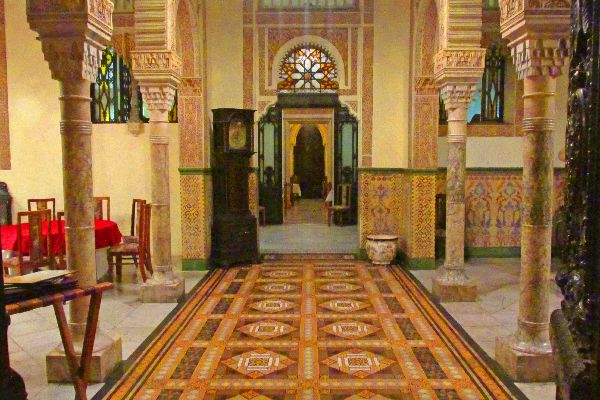 Palacio de Valle,
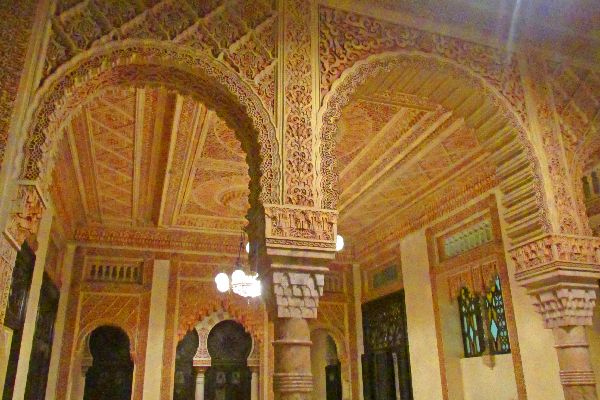
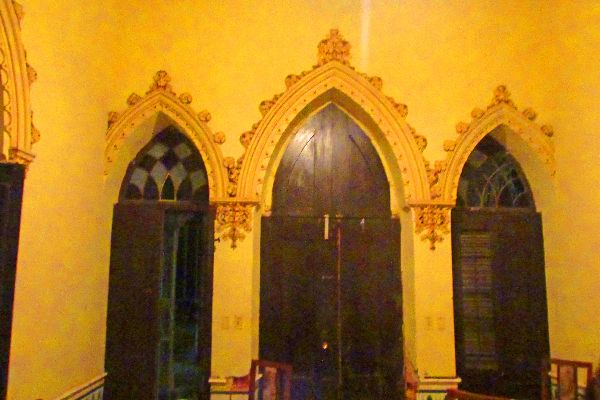
is an eclectic architectural jewel located in the Punta Gorda. It is reminiscent of Spanish-Moorish art, with influences of Gothic,
Romanesque, Baroque, Andalusian and Mudejar arts. A quick inventory of the
styles of arches is one way to catalogue the diversity.
Palacio de Valle,
is an eclectic architectural jewel located in the Punta Gorda. It is reminiscent of Spanish-Moorish art, with influences of Gothic,
Romanesque, Baroque, Andalusian and Mudejar arts. A quick inventory of the
styles of arches is one way to catalogue the diversity.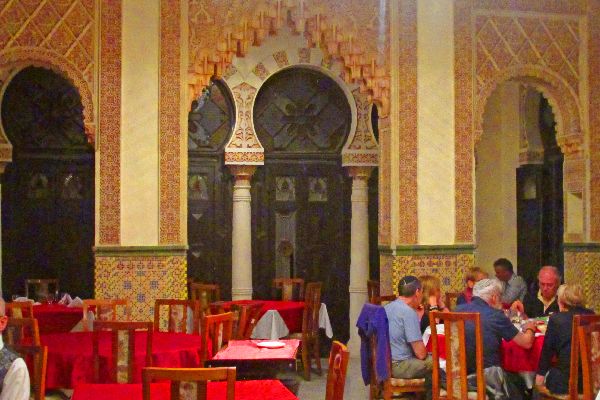
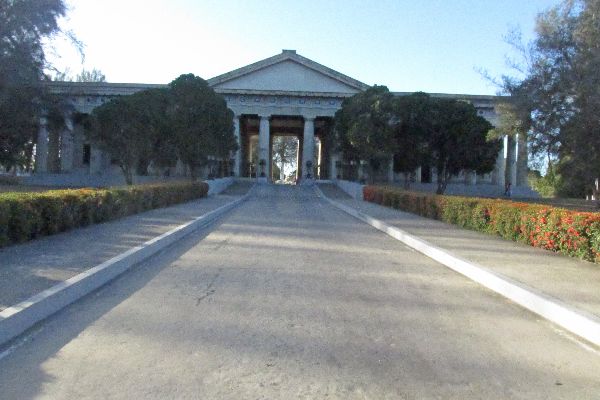
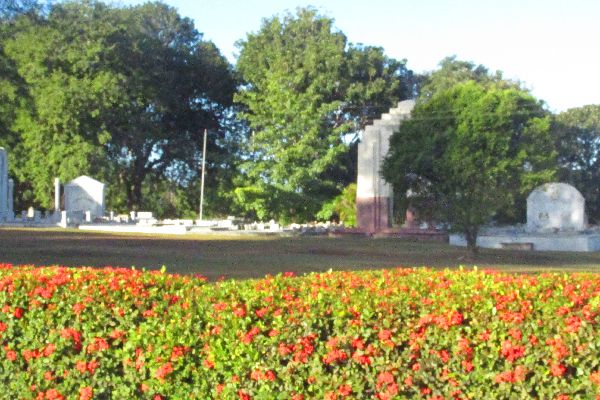
 On
the outskirts of Cienfuego is the main
cemetery. The entrance is an impressive classical portico. It doesn't
exhibit the wealth that is in Colon, in Havana, but it has some of the same
styles of family plots.
On
the outskirts of Cienfuego is the main
cemetery. The entrance is an impressive classical portico. It doesn't
exhibit the wealth that is in Colon, in Havana, but it has some of the same
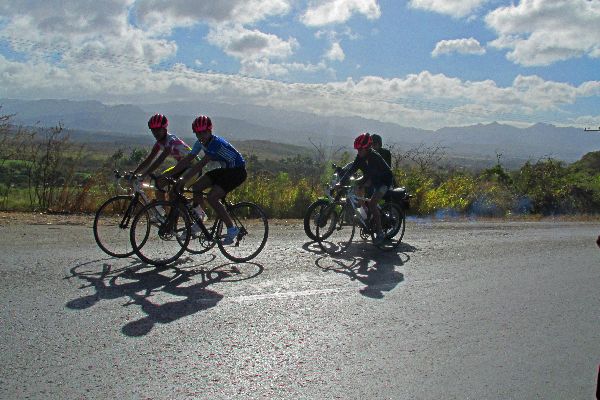
styles of family plots.If you are out on the roads, in the morning, near the bigger cities, it is not usually to be passed by racing cyclists on morning training ride.
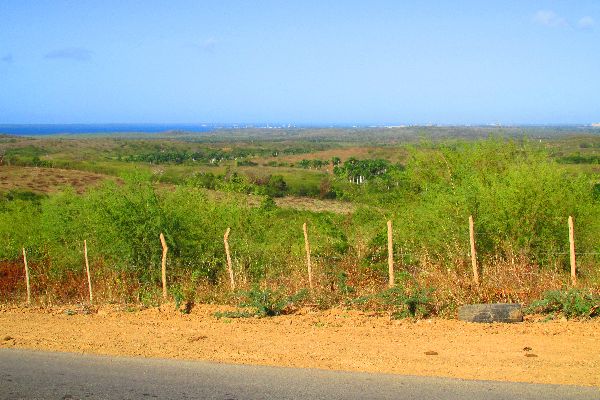
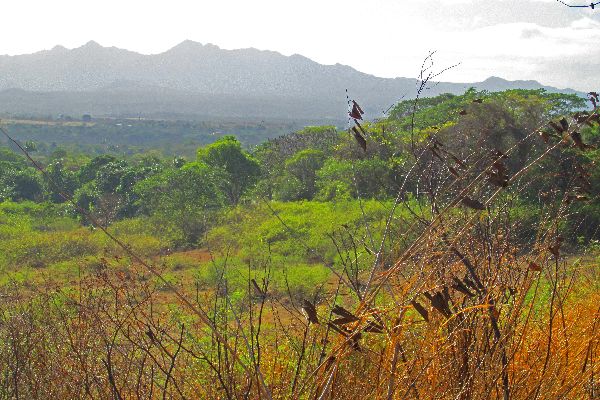
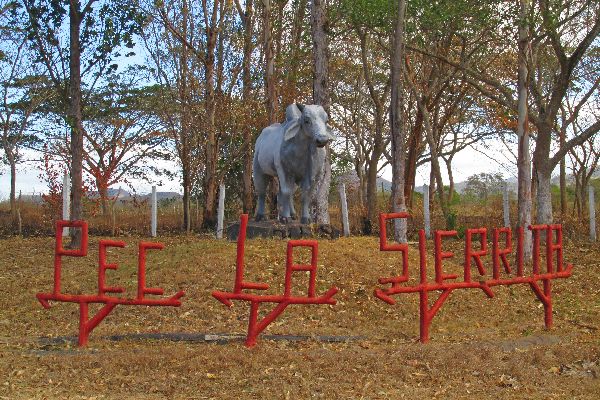 Leaving Cienfuego, words like Wisconsin, Scotland and Virginia
were used to describe the countryside and farmland. I don't recall any ranches in those areas being dotted
with royal palms, but other than that the comparison might have some validity. The farms
are lush, rolling and working. The livestock are cows, horses, pigs, chickens and small ruminants.
Leaving Cienfuego, words like Wisconsin, Scotland and Virginia
were used to describe the countryside and farmland. I don't recall any ranches in those areas being dotted
with royal palms, but other than that the comparison might have some validity. The farms
are lush, rolling and working. The livestock are cows, horses, pigs, chickens and small ruminants.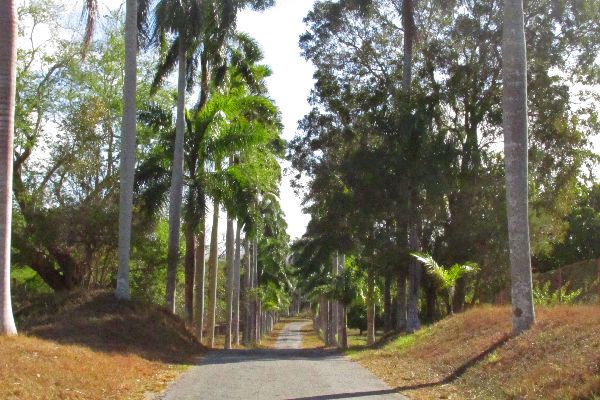
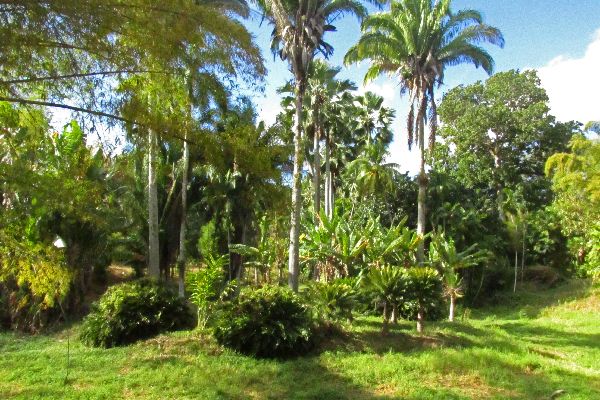
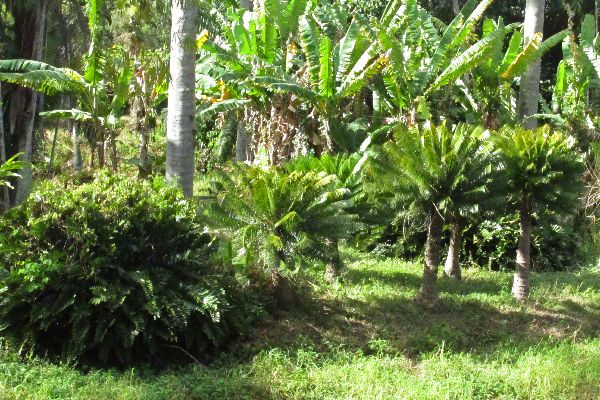
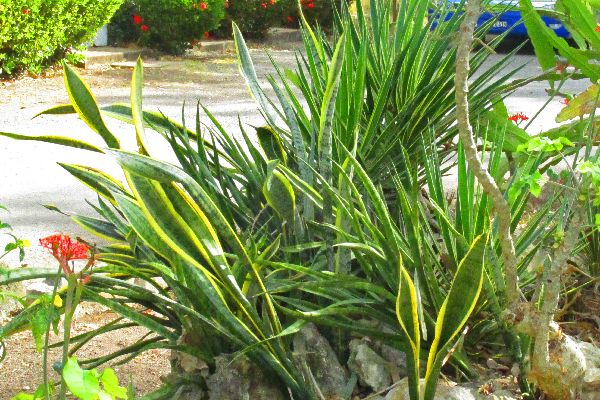
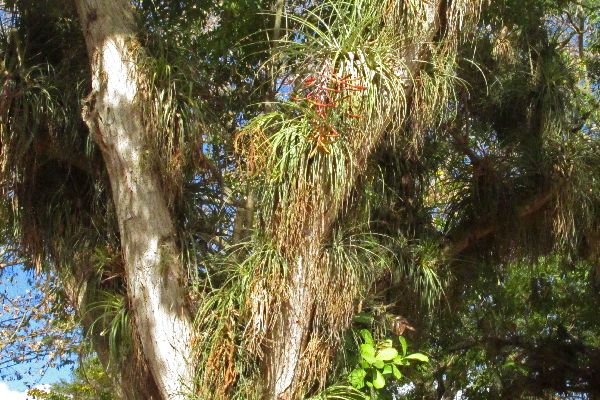
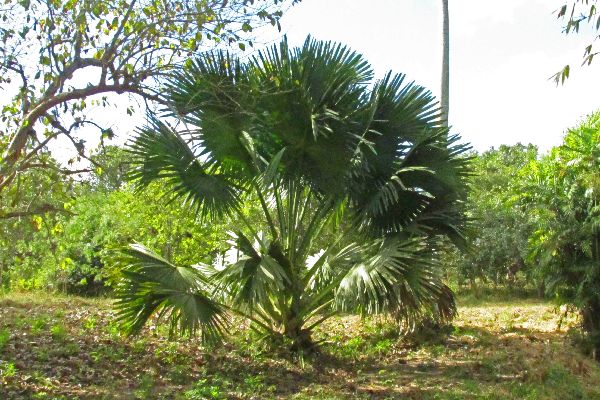
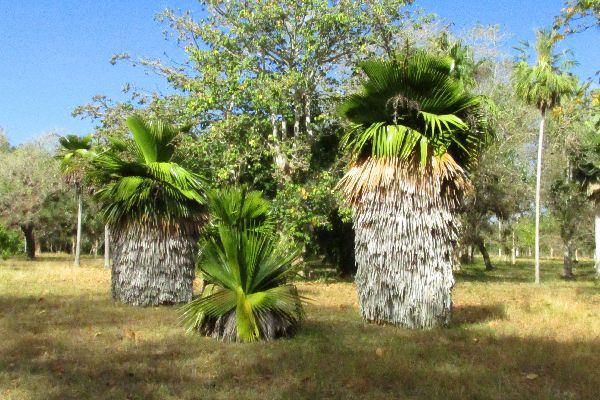
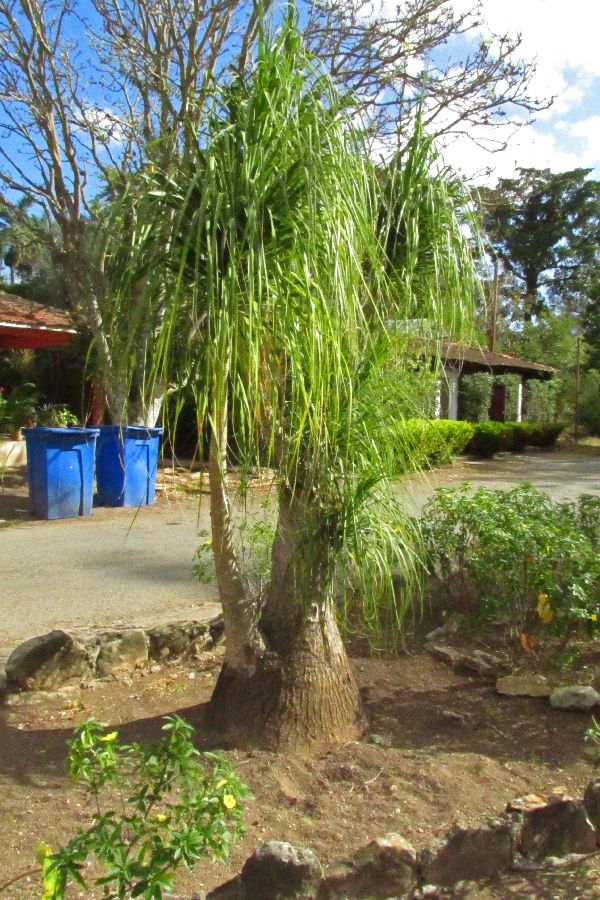
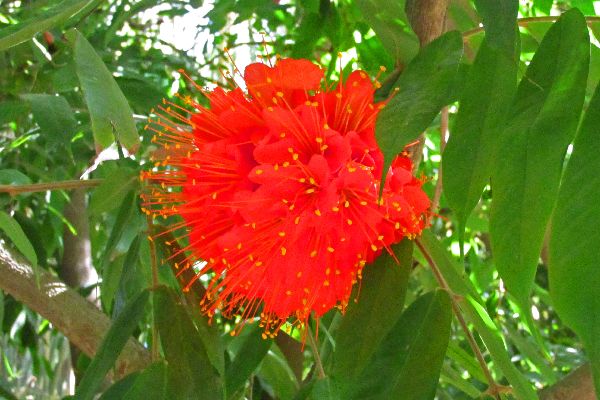
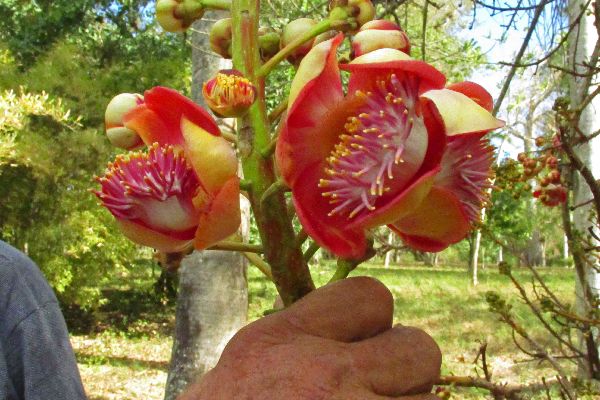
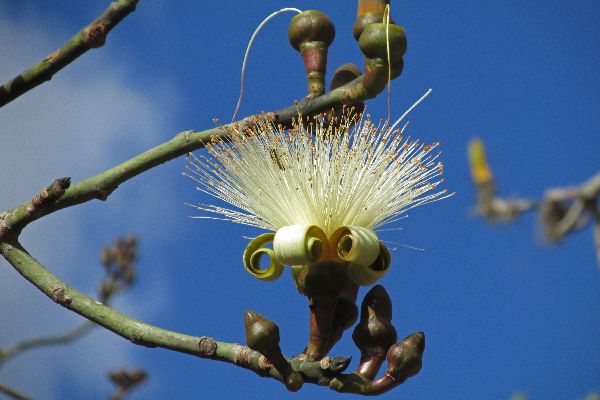
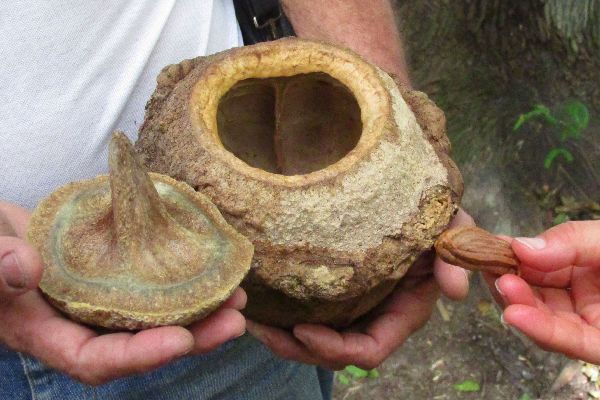
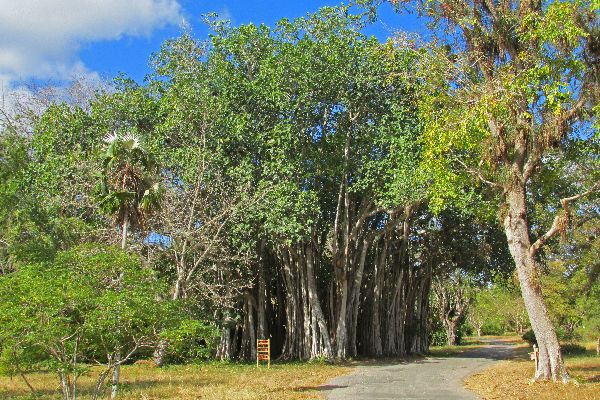 At Jardín
Botánico de Cienfuegos expert botanists provided a guide tour through a portion on
the collection’s endemic and exotic species, medicinal plants, ornamentals,
tropical fruits, and edible spice and food plants. Among its most complete
collections are orchids (400+), palms (230+), ficuses (65+) and bamboos
(29). If this is your thing, there is a lot to be impressed with.
At Jardín
Botánico de Cienfuegos expert botanists provided a guide tour through a portion on
the collection’s endemic and exotic species, medicinal plants, ornamentals,
tropical fruits, and edible spice and food plants. Among its most complete
collections are orchids (400+), palms (230+), ficuses (65+) and bamboos
(29). If this is your thing, there is a lot to be impressed with.It is considered the third most important tropical plant collection in the world.
 The
botanical garden was founded in 1901 by sugar cane mogul Edwin F. Atkins and
his wife, who funded Harvard University botanists to research improve sugar
cane and establish the Atkins Fund for Tropical Research in Economic Botany,
which in turn funded the "Harvard Botanical Station for Tropical Research
and Sugar Cane Investigation". When the sugar cane mill closed in the 1920's
(?), Harvard University continued the research station until the 1961. Since
then, it has been managed by the Government of Cuba. New possibilities for
collaborative with Harvard teaching and research may now be coming to life.
The
botanical garden was founded in 1901 by sugar cane mogul Edwin F. Atkins and
his wife, who funded Harvard University botanists to research improve sugar
cane and establish the Atkins Fund for Tropical Research in Economic Botany,
which in turn funded the "Harvard Botanical Station for Tropical Research
and Sugar Cane Investigation". When the sugar cane mill closed in the 1920's
(?), Harvard University continued the research station until the 1961. Since
then, it has been managed by the Government of Cuba. New possibilities for
collaborative with Harvard teaching and research may now be coming to life.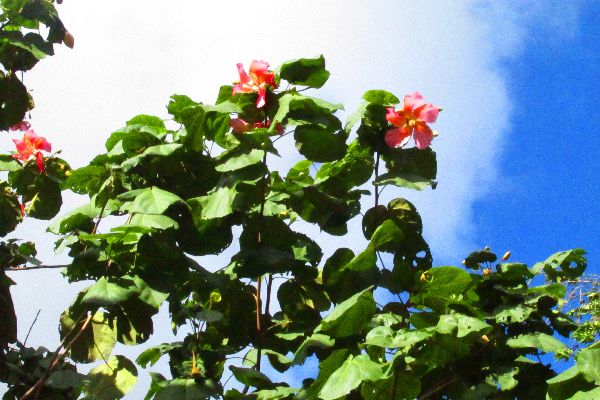




 Please write if you have questions, comment, criticism, praise or
additional information for us, find a bad link or would like to be added to IBF's mailing list. (Also let
us know how you found this site.)
Please write if you have questions, comment, criticism, praise or
additional information for us, find a bad link or would like to be added to IBF's mailing list. (Also let
us know how you found this site.)
 IBF Homepage
Cuba
Homepage Search
ibike
IBF Homepage
Cuba
Homepage Search
ibike