 |
|
|
Guyana (Guiana) Tour |
||
|
||
|
|
||

|
 Boats packed in at Charity stalling (dock). As Charity is the end of the road, a lot of produce that comes
to the market and "urban goods" that leave the market go by boat. We
parked the bikes here and continued our tour by boat. Boats packed in at Charity stalling (dock). As Charity is the end of the road, a lot of produce that comes
to the market and "urban goods" that leave the market go by boat. We
parked the bikes here and continued our tour by boat. |
|

|
This is a gas station in the rivers, creeks and estuaries of western Guyana. The more interesting story is how it gets here. Gas from Georgetown is expensive so the cheaper gas (in part because it is not taxed) is that which comes from the neighboring oil exporting giant, Venezuela -- of course it has to be smuggled in, which is where the stories come in. If the perpetrators are caught, the penalties for smuggling are severe. | |

|
Our base camp west of
Charity was in Wakapoa Community. It is not as much of a central location as a
cluster of islands separated by meandering waterways and inhabited by several dozen
associated Arawak families. Travel between the islands is by canoe and
motor boat. It might as well have been a resort -- the cabins looked out over white sand, the hospitality was suburb, crowds and commercialism were non-existent and all-in-all it was next to paradise. |
|
 |


 |
|
 |
   The
upland parts of the islands are farms and forests. A stroll around can bring you
to a variety of birds, boats, beans (coffee), fish nets, homesteads and
curiosities. One walk came upon a sloth and another could hear howler
monkeys in the distance. The
upland parts of the islands are farms and forests. A stroll around can bring you
to a variety of birds, boats, beans (coffee), fish nets, homesteads and
curiosities. One walk came upon a sloth and another could hear howler
monkeys in the distance. |
|

|
 These are the "school
buses," or more accurately "school canoes." At least when the weather is nice, it seems like an idyllic way to
start the day -- though after the fifth day of school it may not seem so idyllic
to the students. I am sure it is not so nice when the clouds open up, the
winds blow and you
need to keep yourself and your school books dry, and paddle at the same time. These are the "school
buses," or more accurately "school canoes." At least when the weather is nice, it seems like an idyllic way to
start the day -- though after the fifth day of school it may not seem so idyllic
to the students. I am sure it is not so nice when the clouds open up, the
winds blow and you
need to keep yourself and your school books dry, and paddle at the same time. |
|
 |
  Traditionally
errands were done by canoe. Increasingly the canoe is being replaced by motor
boat and the motor boat are getting bigger and bigger engines. The is some
concern that the motor boat might be connected to declining fish stock: Perhaps
the boats scare the fish or as they erode wider and cleaner channels they are
destroy the habitats used for spawning. Traditionally
errands were done by canoe. Increasingly the canoe is being replaced by motor
boat and the motor boat are getting bigger and bigger engines. The is some
concern that the motor boat might be connected to declining fish stock: Perhaps
the boats scare the fish or as they erode wider and cleaner channels they are
destroy the habitats used for spawning. |
|
 |
Like the traditionalist: To minimize our environmental impact, get some exercise and see the details of the environment better (mostly birds), we toured the community by canoe. | |
 |
 This
giant tree is at St. Lucian Mission Island. It dates back to the Dutch presence in
the area and is hundreds of years old. The story is that the Dutch planted
similar trees as they established settlements Guyana. This
giant tree is at St. Lucian Mission Island. It dates back to the Dutch presence in
the area and is hundreds of years old. The story is that the Dutch planted
similar trees as they established settlements Guyana. |
|
 |
 The
primary care clinic at the Mission handles basic health assessments, treatment
of routine illness, prenatal care, preventative medicine, health education and
normal deliveries. Any condition with complication or requiring advanced
medicine has to be evacuated, which requires procuring a boat and an hour of
travel. The
primary care clinic at the Mission handles basic health assessments, treatment
of routine illness, prenatal care, preventative medicine, health education and
normal deliveries. Any condition with complication or requiring advanced
medicine has to be evacuated, which requires procuring a boat and an hour of
travel. |
|
 |
 In
Wakapao there are elementary schools on Mora Island, St. Lucian Mission (left) and Yarashirima
Island. At the Mission there is also a high school (right) and
dormitories. In St. Lucian Mission elementary school there are more grades
than classrooms so several levels and their teachers need to share the rooms.
In the yard of the school is a play structure. In
Wakapao there are elementary schools on Mora Island, St. Lucian Mission (left) and Yarashirima
Island. At the Mission there is also a high school (right) and
dormitories. In St. Lucian Mission elementary school there are more grades
than classrooms so several levels and their teachers need to share the rooms.
In the yard of the school is a play structure. |
|
 |

 |
|
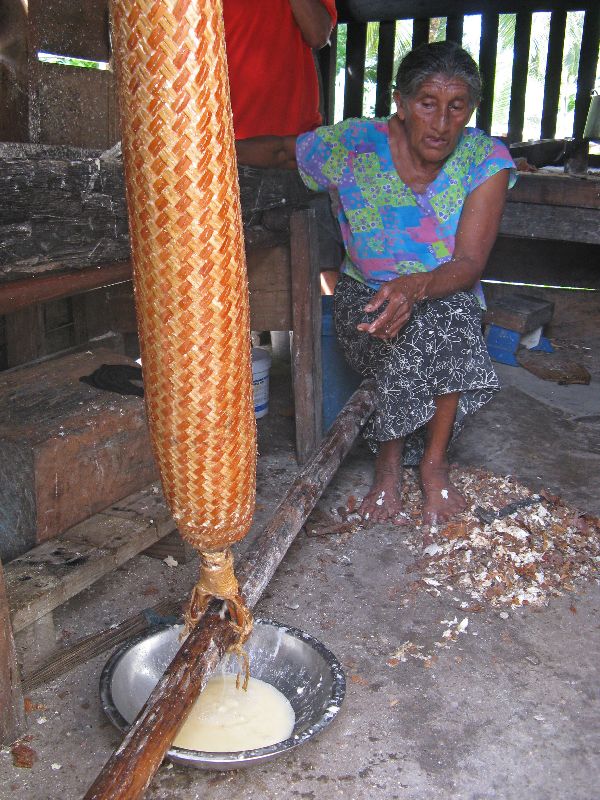
| One of the staples of the Amerindians is cassava bread. | ||
 |


 |
|

|
 Making
it requires many steps and takes the better part of a day. Here is the
recipe: Making
it requires many steps and takes the better part of a day. Here is the
recipe:
Matapi are only made by men. They work like Chinese finger traps: The more you pull on them the tighter they get, but if you squish the ends towards each other they expand and whatever is inside can be released. A matapi in regular use will last about six months. The chemical which make the liquid poisonous is strychnine. In its natural forms strychnine is relatively unstable and breaks down even faster when heated (but produces toxic fumes.) The Amerindians boil the liquid from the cassava until it reduces and caramelizes to form a black liquid called cassareep. This is used as a flavoring in stews (Pepperpot), sauces, on meat and in other dishes. |
|

 |
The big sport in Guyana is cricket. It doesn't take an
area much wider than a trail for a batter and pitch to try their skills against
one another. The youngest children in the community seem to get the job of
racing pell-mell through the bush to get the ball when it is hit.
Some afternoons members of our groups have participate in some of the cassava bread cooking tasks (pounding and toasting the cassava meal), played with the kids, gone swimming and shared in the life of the house/community. These times are usually at or near the top of the list of prized memories of the tour. |
|

|
 Each island seems to have a family that runs a small store.
The inventory in each seems pretty much the same; a short list packaged and
canned food, soft drinks, candy, cleaning supplies Each island seems to have a family that runs a small store.
The inventory in each seems pretty much the same; a short list packaged and
canned food, soft drinks, candy, cleaning supplies
|
|

|
 The Double Adirondack Chair
was built by the Wakapoa Woodworking Workshop,
and is sale. Doll furniture is also available and much easier to export. It is also possible to come to Wakapoa for
workshops at the Woodworking center and make
your own furniture.. The Double Adirondack Chair
was built by the Wakapoa Woodworking Workshop,
and is sale. Doll furniture is also available and much easier to export. It is also possible to come to Wakapoa for
workshops at the Woodworking center and make
your own furniture.. |
|

|
In the afternoon we met with a community council member, school and health center leaders and learned about life, politics and economics in the community. At the end of the program we heard "My Identity", a poem, read by Satra (see below). This was the poem she had read as a finalist in the Region 2 Amerindian pageant, of the Miss Guyana pageant, a few months earlier. | |

|
My Identity
From the indigenous group I come It was me! Walking bare feet It was me! Who name most of the rivers, lakes, mountains
and trees, It was me! Who paddled my canoe, Now, it is me! Who has evidence of my identity, My shoulder bag, purse and letter case, |
|
 |
 The are several ways that the outside world is making its way into Wakapoa.
Bigger, faster boats was mentioned above. Almost every house has a solar
voltaic panel. The shops have more processed food for sale. And,
Massarie Island has a cell phone antenna (left). The operation is powered
by solar panels and has a stand out front where people can plug in their phones
to keep them charged (right).
The are several ways that the outside world is making its way into Wakapoa.
Bigger, faster boats was mentioned above. Almost every house has a solar
voltaic panel. The shops have more processed food for sale. And,
Massarie Island has a cell phone antenna (left). The operation is powered
by solar panels and has a stand out front where people can plug in their phones
to keep them charged (right). |
|
 |
Many thanks to these special people who made our visiting so enriching. |
|
|
|
||
|
|
||
|
"Hosted by
DreamHost - earth friendly web hosting"
|
||
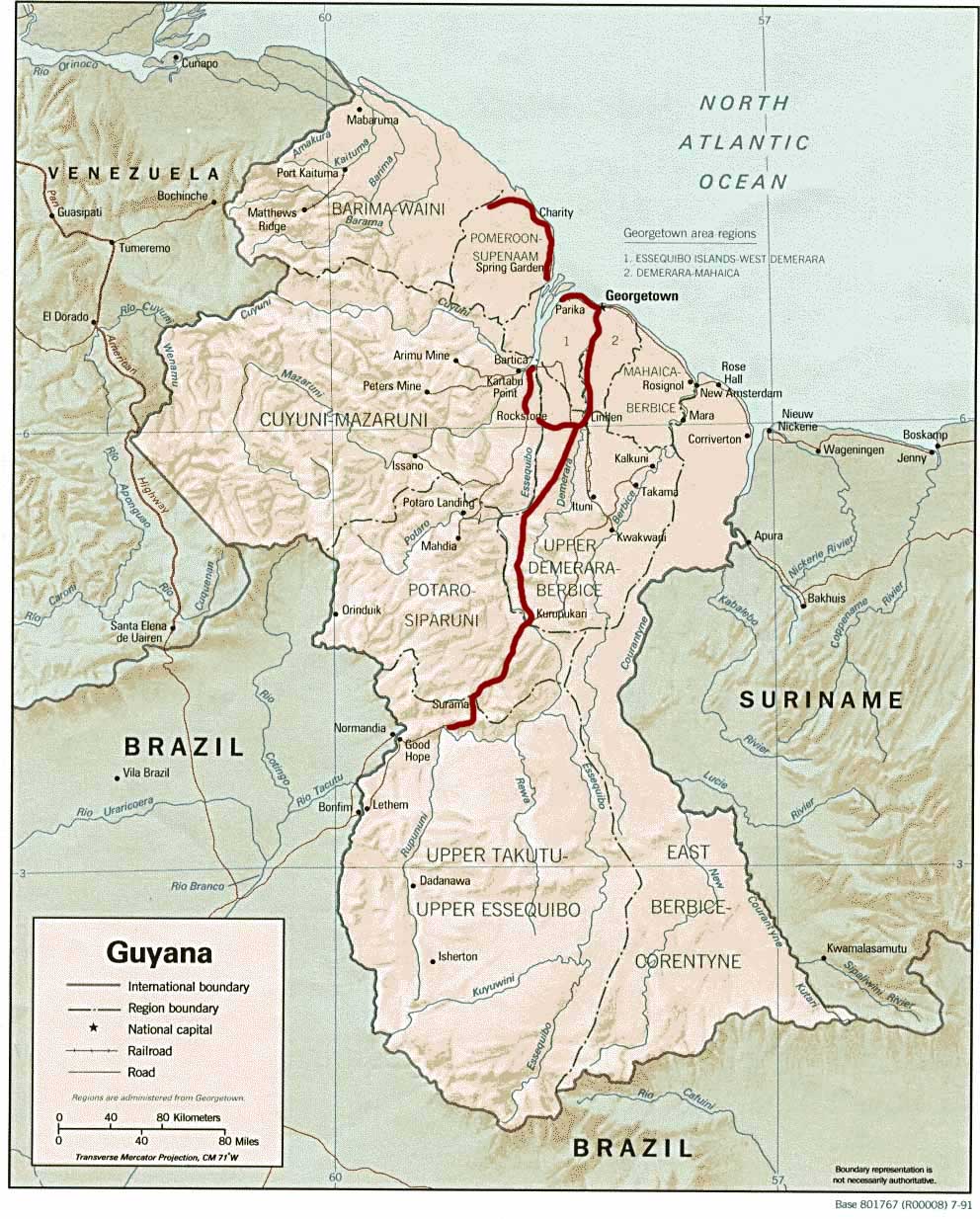
 Guyana
Cultural Tour: Pomeroo River, Wakapoa
Guyana
Cultural Tour: Pomeroo River, Wakapoa


 When
it gets to hot you can just walk down to the "drive way" and take a swim.
When
it gets to hot you can just walk down to the "drive way" and take a swim.







 Please
contact us
Please
contact us IBF Homepage