
Africa Kid's Page

 IBF is 100%
solar powered
Welcome! We are happy that you wanting to learn more about the
delightful continent of Africa, its many countries and wonderful people!
We hope you enjoy the African games, discussion and books.
• We would love for you to give us ideas for this kid‘s page.
• Write a book review about an African book.
• Ask an question you always wanted to know about Africa for our "I
Wonder" series.
• Have you been to Africa? Share your experience with other kids!
Just send us an email at: "ibike@" our domain name.
» AFRICAN FUN AND GAMES
Games played in Africa: Certainly many Africa kids spend a lot more time working as part of their family and looking after siblings (especially girls) than there counterparts in the North, but there is some play as well. Here is a partial list -- the specific differs a little from place to place.
- Homemade toys from wood, straw, animal skins and bone, stones, found objects, etc.
- Boys primarily: Rolling hoops, rims, tires ("inkil" in Eritrea); drumming, soccer, basketball, volleyball, kickball, athletics, wrestling (Gambia), boxing (Ghana), bicycling; playing with trucks hand made from wood (palm), wire, tin cans and other found objects; play-dancing masks (Gambia); checkers (with variations), scrabble, parchisi; "aquilone" flying kites (Eritrea); "balabburo" coin toss (Eritrea); "arimando" marble race (Eritrea); "cucinetti" go carts (Eritrea); "kib-kib" hackey-sack (Eritrea); "ashakhakhat alem" "lawn darts" (Eritrea); "Osani" (Efé, NE D.R. Congo).
- Girls primarily: bicycling, kickball, jump rope, hopscotch (teley-teley in Eritrea); playing with dolls, often hand-made from wood, cloth, straw and found objects; clamping/kicking game that seems to be akin to rock/paper/scissor (West Africa); "jacks" with stones (no bouncing ball); "fiti fiti" squat jumping (Eritrea);
- Boys and girls: Hide-and-seek ("Pero" in Yoruba, "Chirchir Abede" in Tigrinya); marbles (not always with marbles; nuts, seeds, stones and dried fruit); dance, singing and music (the instruments vary by region, but various homemade designs of drums, balaphones and stringed instruments (guitars and harps) - some made with tin cans - are common);
- Everyone: board game with 10 or 12 compartments, played with seeds or stone -- popularized by Disney as mankala, it is an old game, with real names, played across the continent. Traditional names for it are: gbo walo (Bassa), ma kpo (Mano), tay gbo knongi (Gbandi), mana (Kpelle), wrah (Kru), owari (Twi), ayo (Yoruba), aju (Ewe), wori (Malinke), wosley (Ivory Coast), owela (Oshiwambo), mweso (Luganda), soni (Usambara), bao (Chichawe), Tsoro (Shona), Isafuba (Ndebele)
Africa map. How fast can you match African countries
and capital cities? Have a contest with your friends. (This is my favorite
African game! - Village Publisher)
www.yourchildlearns.com/owlmouse.htm
Africa Map Games. www.sheppardsoftware.com/African_Geography.htm Note: the Sheppard maps are more complete than the Child Learn maps.
Africa Photos Galleries of photos of animals, people, plants, scenery, towns and more.
Build a Practice Marimba with Kids! Article by Stephen Golovnin (PDF, 3 pages)
» I WONDER...
Your questions about what Africa is really like.
— Do you have a question about Africa or Africans? Email us your question
at: ibike (at) ibike dot org.
Question: What is a normal day like for an African child?
Answer: A normal day for an African child differs from country to
country and whether they live in the city or in a rural village. In general
children’s days begin early with morning chores and preparing for school.
Some children may go to schools far from their homes, so they wake early.
Most African schools require uniforms. At school children learn Reading,
Writing, Arithmetic, and different languages. Children also have playtime.
Soccer is a big favorite in Africa. In the afternoons children go home to do
chores, homework or play in their communities.
Answer courtesy Harambee Centre staff. Harambee Centre travels to Oregon and
southwest Washington schools to talk about Africa. Visit their organization
and kid’s books at www.harambeecentre.org
• Have you been to Africa? Share your experience with other kids! Email us for details at: "ibike@" our domain name.
» AFRICAN RECIPES
Always make sure an adult is supervising you when you are cooking!
Recipes from 26 African countries and regions; plus how meals are served
in several countries.
www.africaguide.com/cooking.htm
» AFRICAN LANGUAGE
There are many languages in Africa. Kiswahili is a language used throughout
eastern Africa, including Kenya.
Kiswahili greeting: Jambo! Habari?
English translation: Hello! How are you?
» AFRICAN CHILDREN'S BOOKS
The following Africa-positive books are recommended for children.
Nonfiction Books
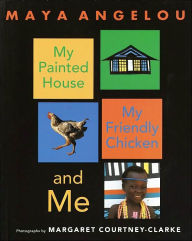 My Painted House, My Friendly Chicken, and Me by Maya Angelou
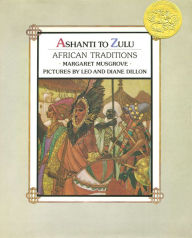 Ashanti to Zulu: African Traditions by Margaret Musgrove
 A is for Africa by Ifeoma Onyefulu
Picture Books
 Bintou's Braids by Sylviane Diouf
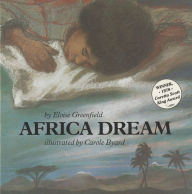 Africa Dream by Eloise Greenfield
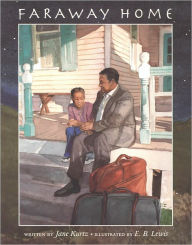 Faraway Home by Jane Kurtz
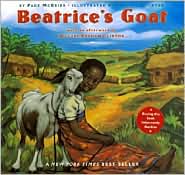 Beatrice's Goat, by Page McBrier
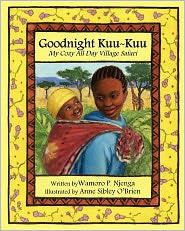 Goodnight Kuu~Kuu: My Cozy All Day Village Safari, by Wamoro Njenga
 Day Gogo Went to Vote: by Elinor Batezat Sisulu
Picture Book Authors
Each author has written at least three children's books with an African
Theme:
Niki Daly
Virginia Kroll
Juvenile Fiction
 Song of Be by Lesley Beake
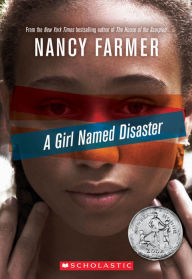 Girl Named Disaster by Nancy Farmer
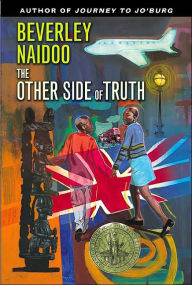 Other Side of Truth by Beverley Naidoo
For annotations and critiques on more children's
materials on Africa go to
Africa Access.
Home | About Us | Contact Us | Economics | Education | Encouragement | Engineering | Environment | Bibliography | Library

The International Bicycle Fund is an independent, unincorporated entity. Its primary purpose is to promote bicycle transportation. Most IBF projects and activities fall into one of four categories: planning and engineering, safety education, economic development assistance and promoting international understanding. IBF's objective is to create a sustainable, people-friendly environment by creating opportunities of the highest practicable quality for bicycle transportation.
 Please write if you have questions, comment, criticism, praise or
additional information for us, to report bad links, or if you would like to be
added to IBF's mailing list. (Also let us know how you found this site.)
Please write if you have questions, comment, criticism, praise or
additional information for us, to report bad links, or if you would like to be
added to IBF's mailing list. (Also let us know how you found this site.)
"Hosted by
DreamHost - earth friendly web hosting"
Created by David Mozer.
Copyright © 1995-2026 International Bicycle Fund. All rights reserved.