| Andes to Amazon | |||
| Ibike Ecuador | |||
| Dispatch 2 - Machachi | |||
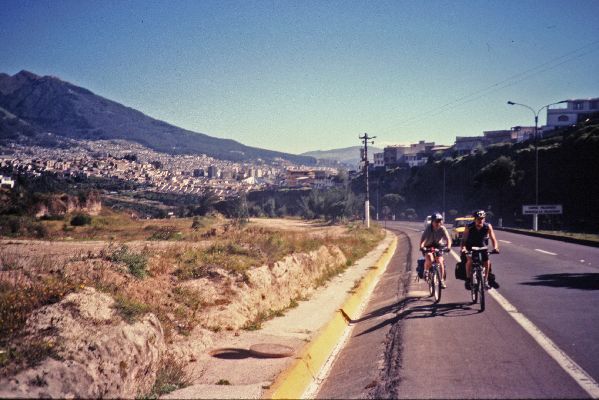 |
To be honest, bicycling out of Quito leaves much to
be desired: The roads are congested and many of the
vehicle are diesel and pump out an eye burning, throat choking
exhaust. Combine with the elevation and hills, it is a grunt-through-it
combination. Over the last decade, the per vehicle emissions may be improving but the increase in
the overall number of vehicles seems to be keeping the overall pollution
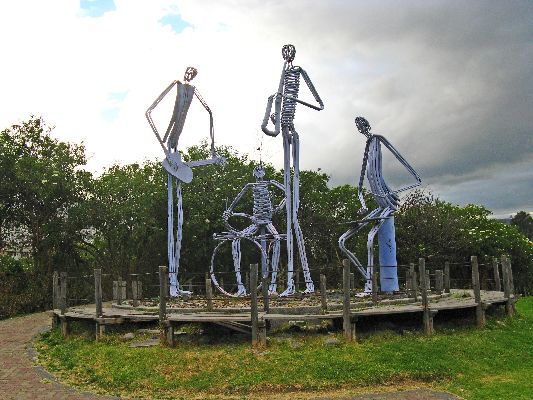
levels at least even. To provide a bit of cultural relief, the ciclovia in
Quito has some public art along it. |
 |
|
| Most of Quito lies in a high valley. To go very far you have to either wind around and climb a mountain, or descend into a canyon and then climb out again, or a combination of all of this. | |||
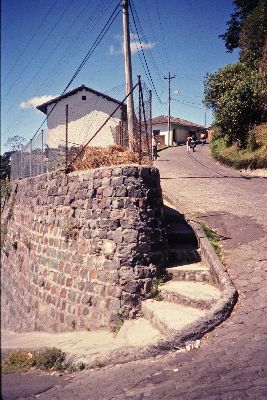 |
After a suitable experience with congestion and ups and downs, our route brought us to a section
of the auto pista, limited access road. The combination of a
wider road, being out of the main valley and lower traffic density
actually provided us
with a few whiffs of fresh air. We got further relief when we turned on to an alternative route that followed rural roads. There were still belching vehicles, but they were fewer and further between. |
 |
|
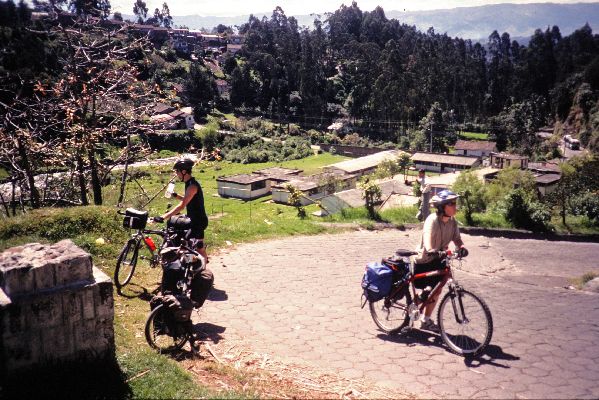
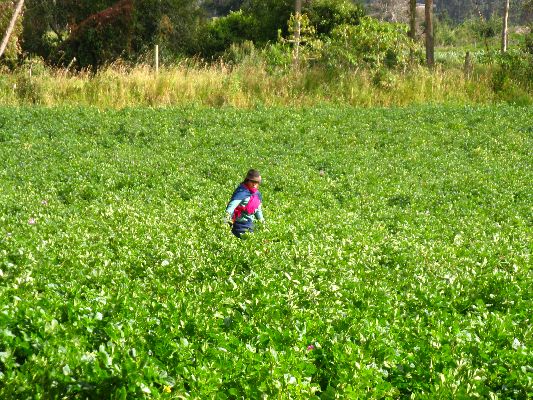
| From Quito the vistas are spectacular, but they get even better as you move into rural areas: Built environments give way to pastures spotted with large dairy cattle. The pastures are split by streams and river. And as is the norm in this area, the horizons are dominated by layers of hills and mountains. Early on in the day the dominant volcano was Antisana. In the afternoon we had some clear views of Cotopaxi. |
 |
||
 |
A disproportionate number of the relatively few buildings there are are dedicated to massive horticulture projects that export long stem roses to markets in the United States and Europe. In less than a decade horticulture has become a major source of foreign exchange for Ecuador. As an off shoot of the horticulture export industry an extensive cell phone network and air freight business has blossomed. When the flowers are ready they can't wait and things need to start moving and keeping moving until they get to market -- the perishable cargo must be transported expeditiously. | ||
 |
At least every ten kilometers there is a small town. In each small town is a central square, and on one side of each square is a Catholic Church. The squares are get people watching places. Ecuadorians don't seem as extraverted or inquisitive as the people in some other places are. They kept there eye averted and seemed reluctant to engage in conversation with us. Or perhaps they have seen plenty of tourists, or foreigners have historically done nothing good for them and they didn't feel a need to engage them. On the other hand there was absolutely no hostility and any time one asks for help, or get service in a store or restaurant, it is given willingly and with a smile. |
 |
|
|
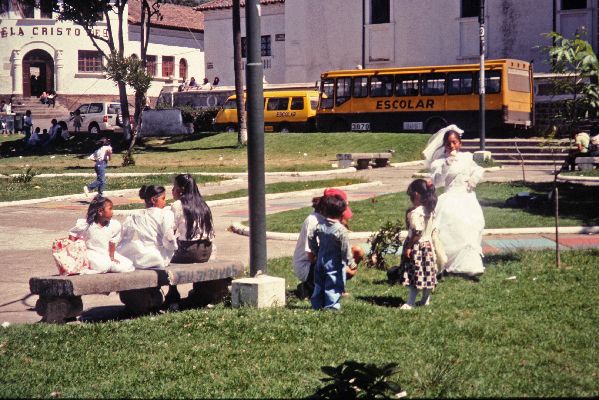
In one town it was communion day when we passed through. The young girls were in multi-layer full white dresses and the boys wore suits. They certainly were the focus of the family for the day. |
 |
||
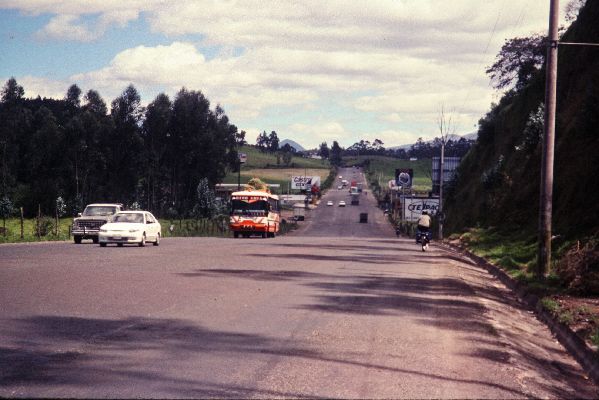 |
After a stretch through rural Ecuador we joined the Pan Americana highway. It is straight, wide, well graded and generally well paved, but traffic volumes are higher and the roadside environment is generally more degraded. When the skies clear it does provide excellent views of Cotopaxi. C |
||
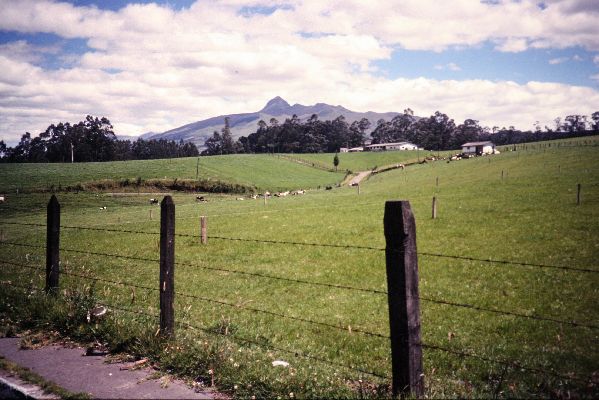 |
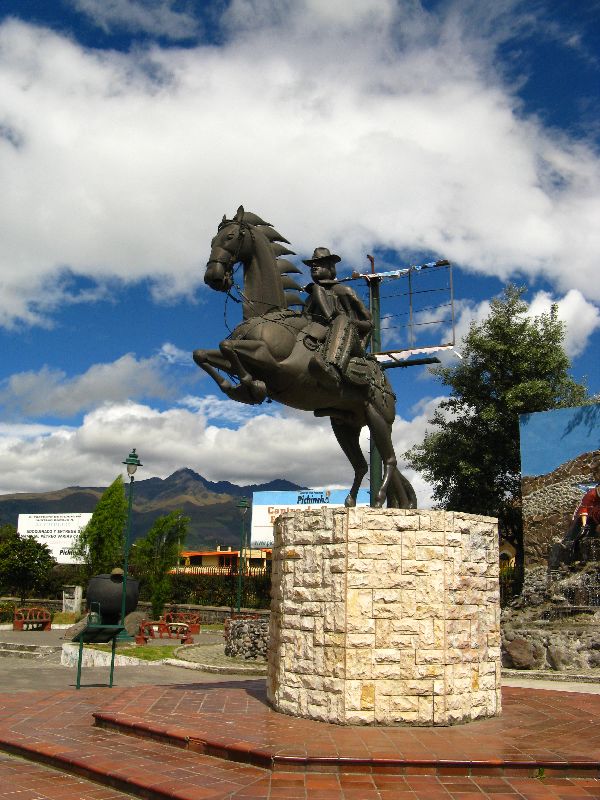
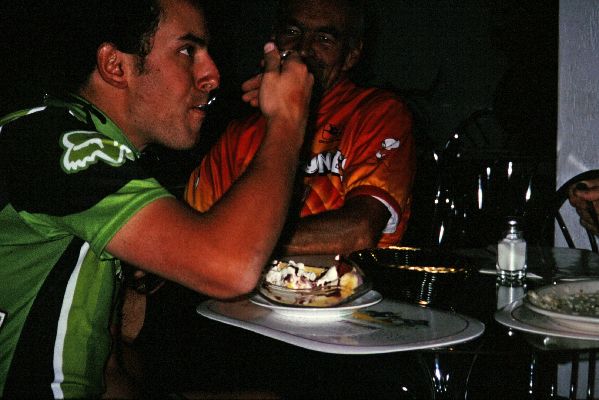
As if two major mountains weren't enough, as we approached Machachi we started to get great views of Illiniza Norte and Illiniza Sur, as well. We still weren't far from civilization, for lunch in Machachi some
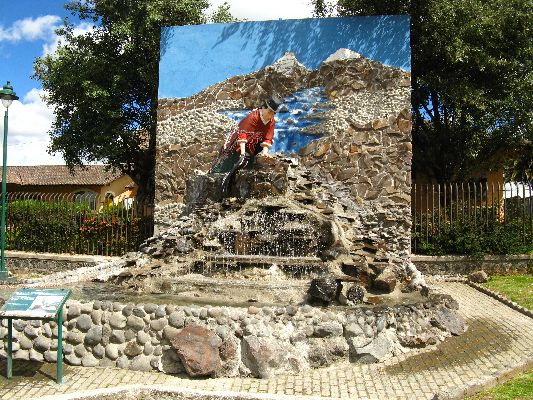
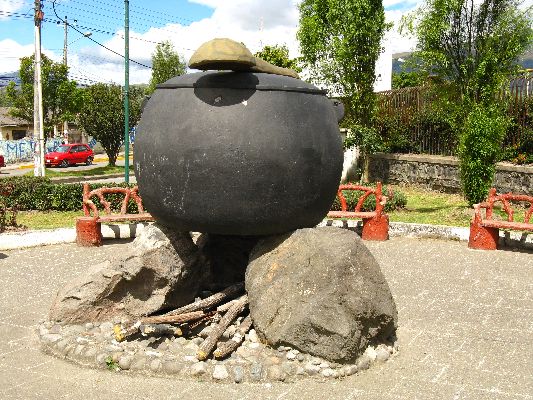
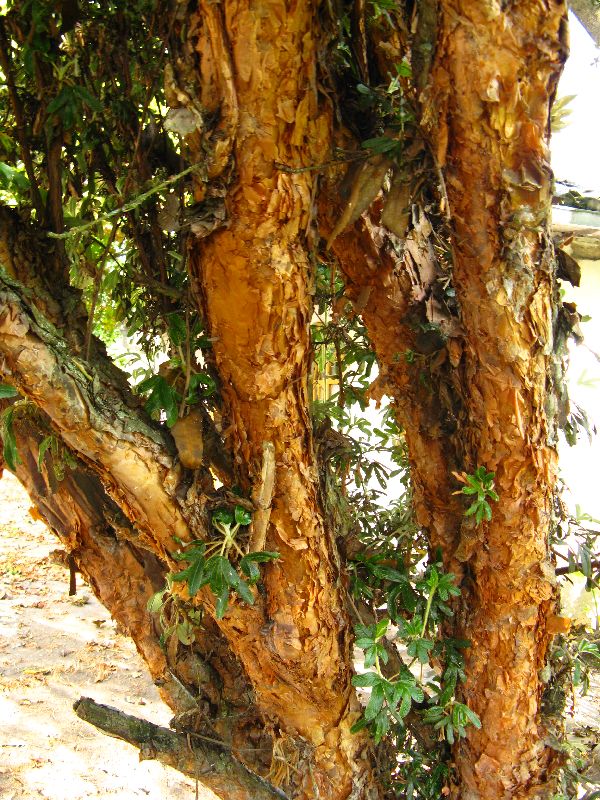
members of the group had banana splits. The star of Like many towns, Machachi had sculptures at the entrance ot the town. Unique to the region, this read paper barl |
 |
|
 |
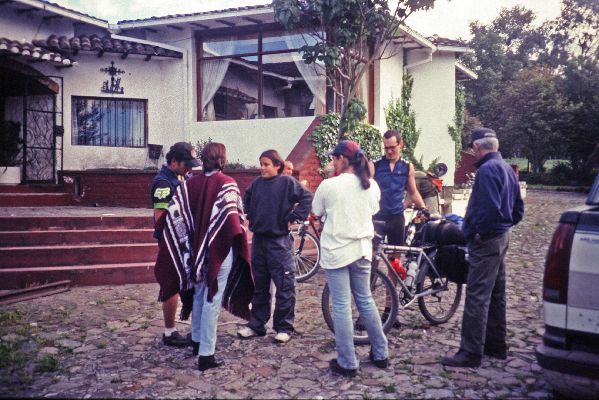
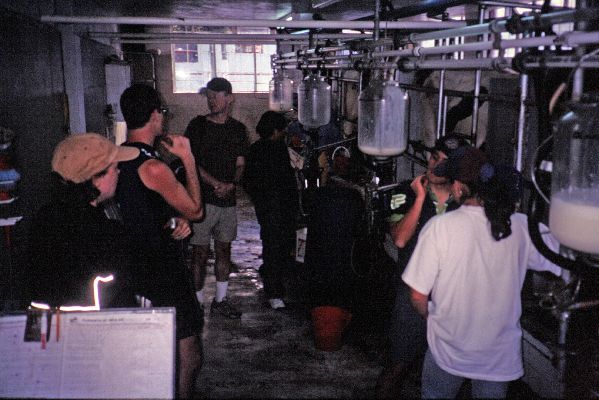
Our accommodations for the evening was a private hacienda. The main activity was conversation. We also went to visit the milking barn for the dairy farm, with automatic milking machines. The farm is also experimenting with a variety of food crops -- some of which were served for dinner. Beside an excellent meal, some libations and long and fascinating conversation with our hostess, we went for an evening walk to view the southern cross -- that was a first for some members of the group. |
|
|
 
|
|||
   
|
|||
 |
|||
|
"Hosted by
DreamHost - earth friendly web hosting"
|
|||
 Please
contact us
Please
contact us IBF Homepage