| Andes to Amazon | |||
| Ibike Ecuador | |||
| Dispatch 3 - Lasso | |||
 |
If
the traffic in the environs of Quito is not to your liking this more rural
milieu may be a little closer to heaven.
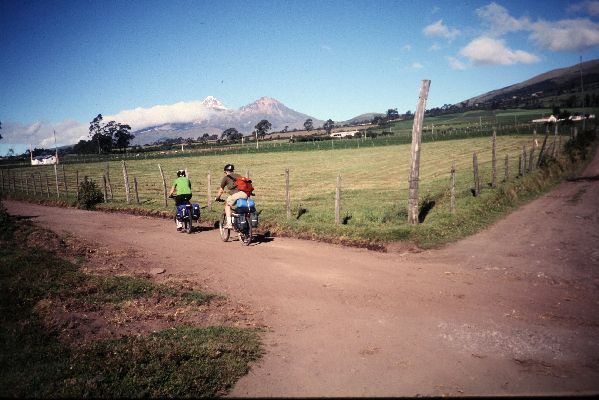
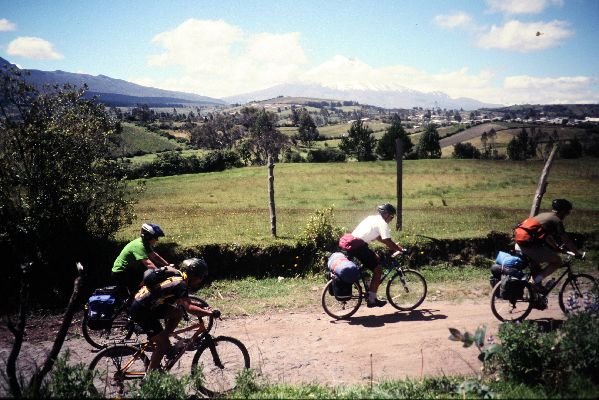
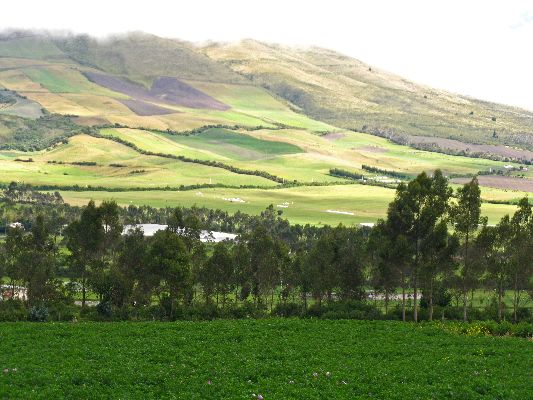
We travelled on secondary and tertiary roads the whole day. Besides
lush fertile looking agricultural land with Ilinza to the right and Cotopaxi
to the left as
backdrops there was plenty of other variety of scenery to engage the mind and
spirit: |
 |
|
|
|
 |
|
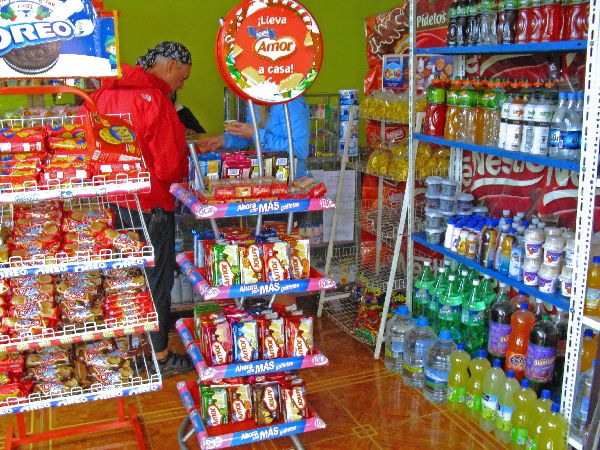 |
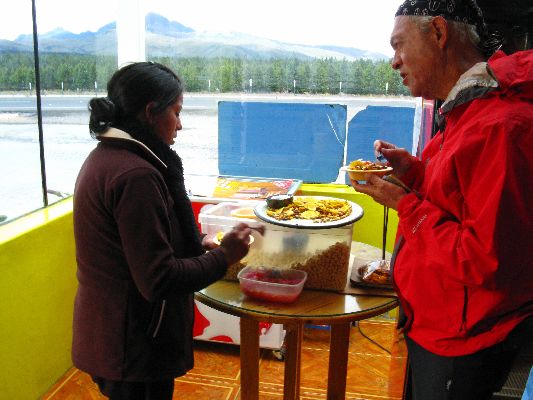
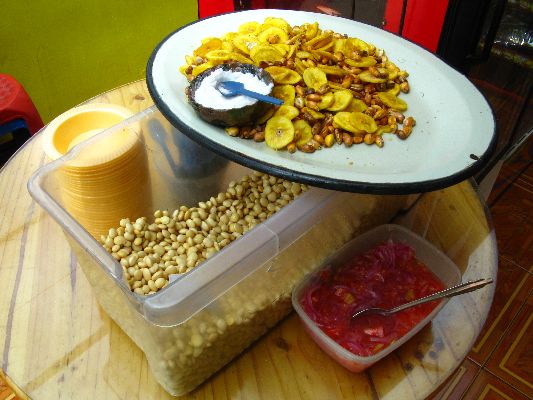 Most
of the snack food in the mini-markets is pretty much the same as the heavily
processed food you would find in similar business worldwide. We were
delighted to find a treat in a corn, soybean, banana and salsa snack that
was assembled on the spot. Most
of the snack food in the mini-markets is pretty much the same as the heavily
processed food you would find in similar business worldwide. We were
delighted to find a treat in a corn, soybean, banana and salsa snack that
was assembled on the spot. |
 |
|
 |
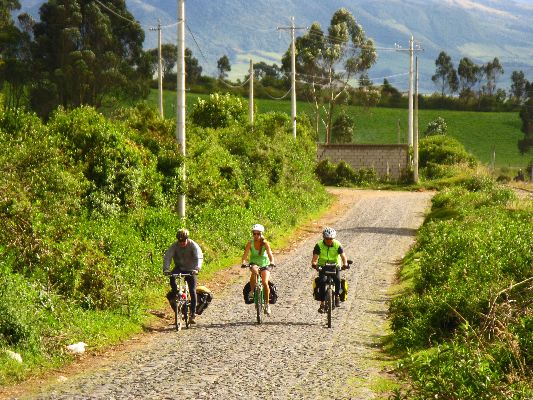
From the lowlands, 3000 meters, we climbed across the shoulder of Ilinizas,
at almost 3800 meters. We were told that this was the
old Pan Americana -- it was deserted now. Given the condition in
places, you could have told me
that it was the original Inca Road and I would have believed you.
Much of the highland part of the road was constructed with cobble
stone. Clearly a very solid, durable and stable material for this kind of environment.
Such as it
was, the road was in reasonably good repair. I understand that this is
similar to how the Inca Kings had the roads constructed, but it leaves
something to be desired as a bicycle path. |
 |
|
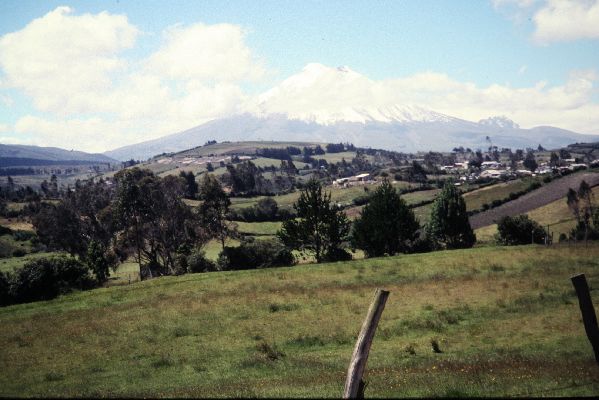 |
Despite the challenges of the road it is a spectacular ride. [On the 2001 tour, the beauty of Cotopaxi was like a siren that wanted to suck a bunch more film through my camera (yes film in those days), the air was crisp and clear and the temperature was wonderful. | ||
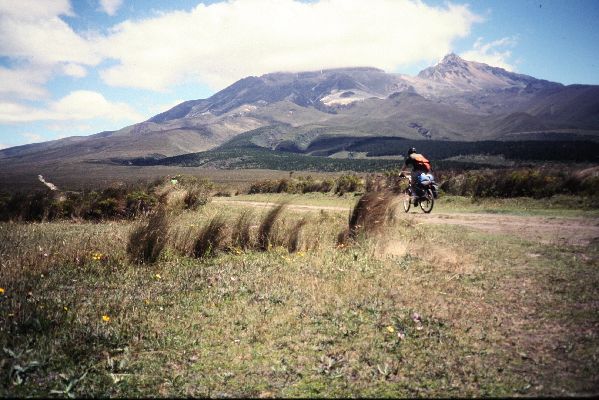 |
At about 3500 meters we got to the "paramos", a high tundra plain of tufted grass, wildflowers and wind. I felt like I was riding on top of the world. This was part figurative and part literal, but the literal quality gave the figurative an addition lift. |
 |
|
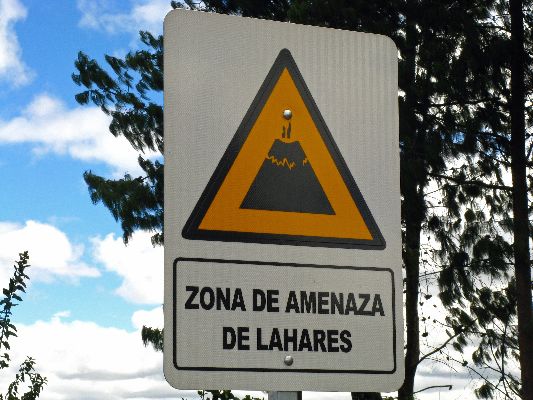 |
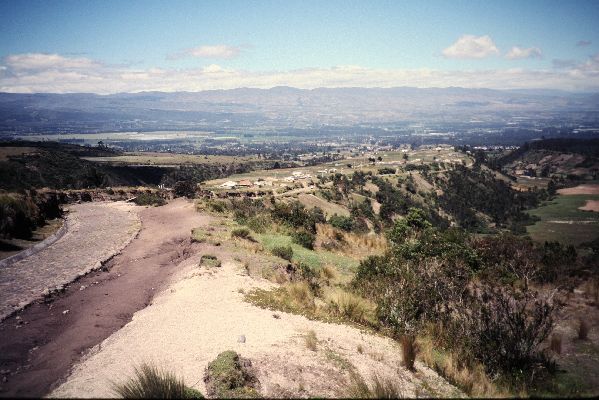
The presence of signs warning about Lahars is a little amusing. They
are posted about every half kilometer along the Pan Americana, for scores of
kilometers. The first several could be considered informative, but
after the first dozen it seem improbably that anyone could get that far
without knowing that they were in a region of river valleys leading off of
glacier and snow covered active volcanoes. |
||
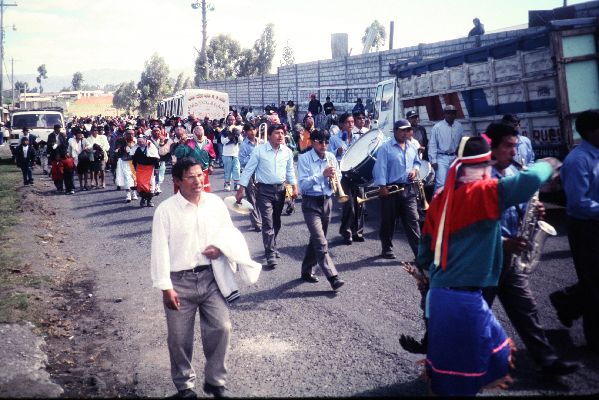 |
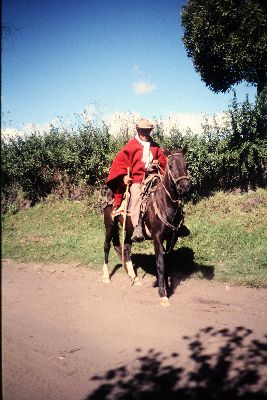
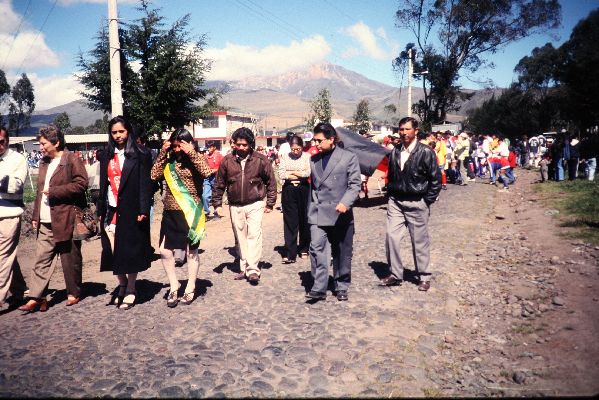
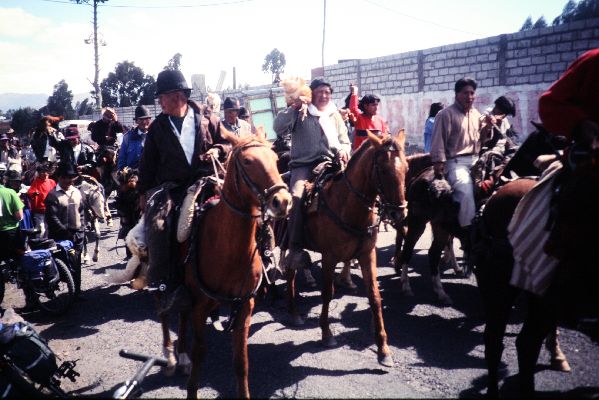
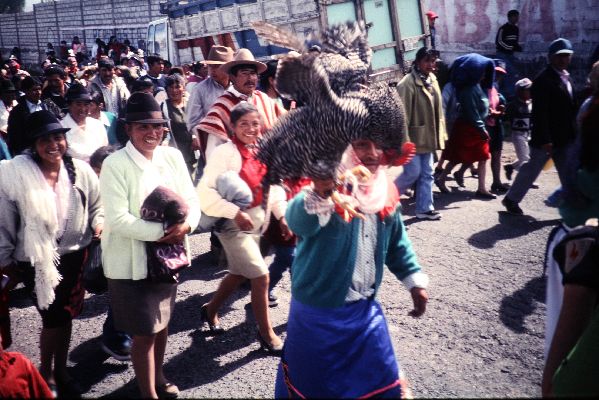
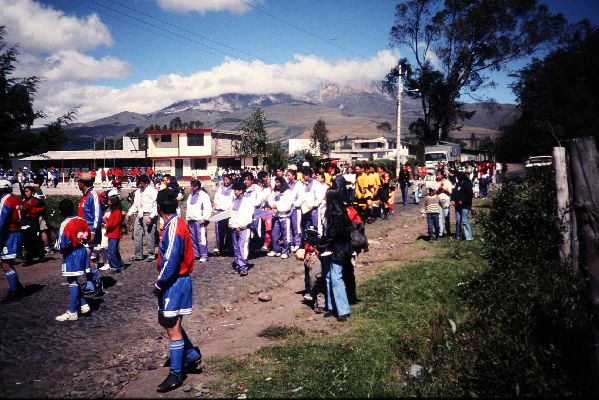
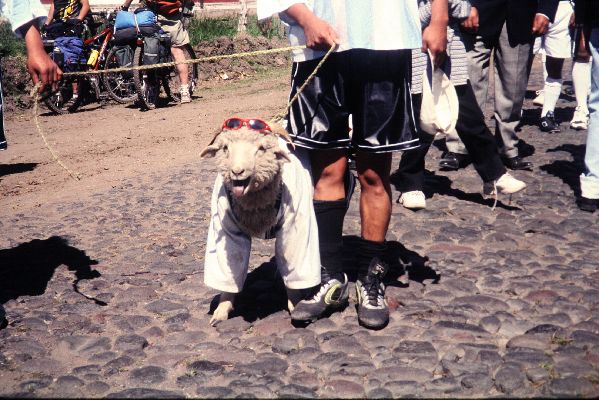
After the descending 500 meter vertical in five kilometers the surprise in San Juan de Pastocalle was the festivities of a bull fight. Again we arrived just in time for the parade. The main characteristics of the parade were wild dresses, masks and music. There were men on horse back, marching bands and masked people swinging live chickens. Asking around we didn't get an explanation for the tradition or the symbolism. | ||
 |
The locals acted like the bull fight was about to begin so we
joined them on the fence of the corral. It seems like in this
bull fight anyone can participate and the bull is not killed -- the town
can't afford it and no admission is charged. Over the course of the
next hour several young men darted across the corral, the cowboys rode
through with their lassos and occasionally tried to roundup the bulls in an
adjoining corral and occasionally some of the bull wondered into the main
corral -- maybe they weren't the right bull. From our less than
sophisticated analysis "a bull fight" never materialized.
Eventually our stomachs over ruled our curiosity and we left without
discovering what the climax of a small town bull fight looks like. |
 |
|
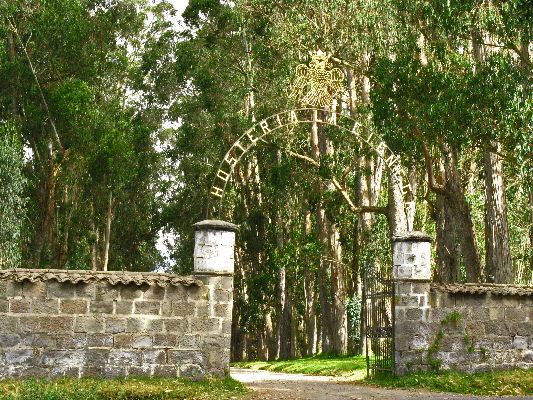
|
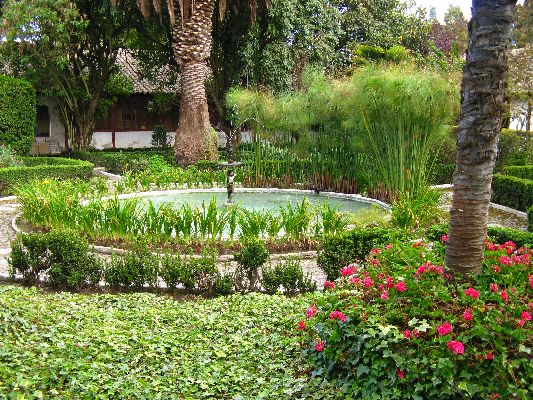
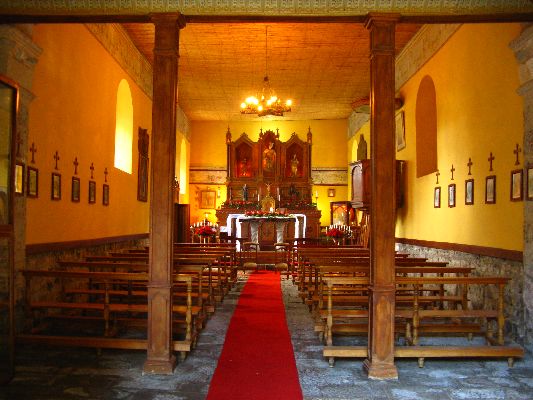
Time
flies when you are having fun or otherwise immersed in new experiences.
It was after four in the afternoon when we finally got to lunch but it was
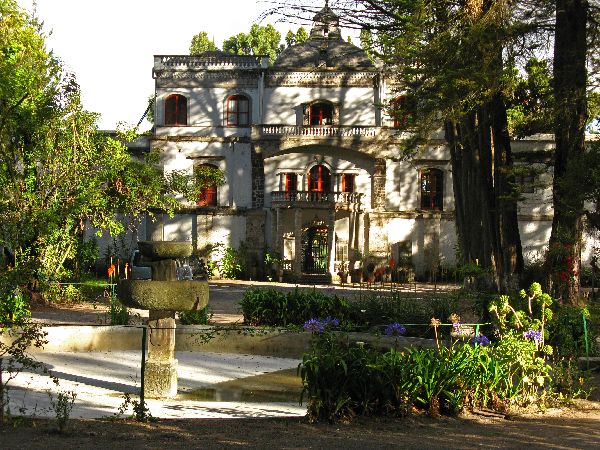
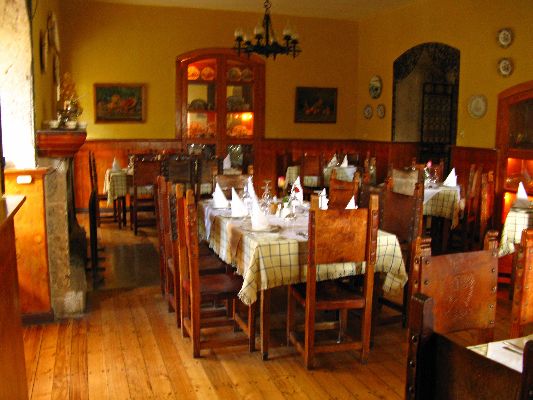
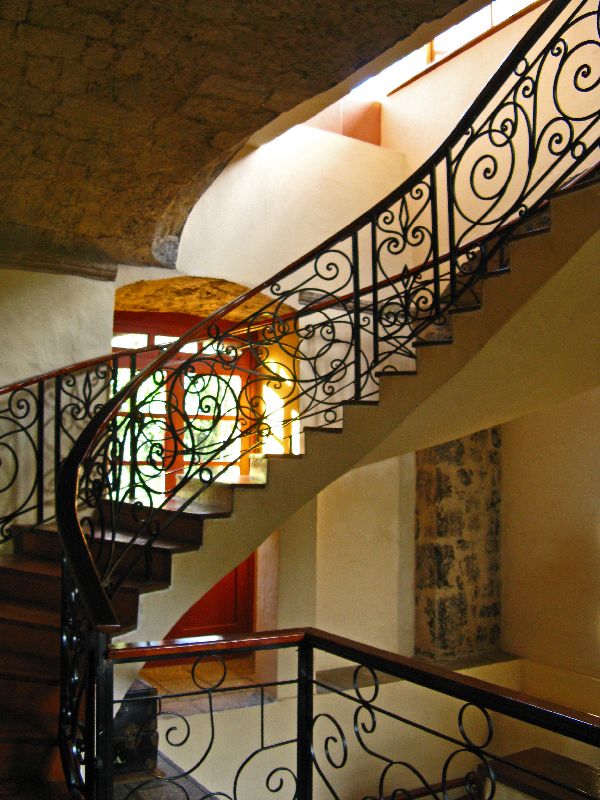
worth the wait. The restaurant was in an old elegant hacienda, with a
tree lined drive, hardwood floors, courtyard garden, private chapel and
shrine, fountains, an other decorative amenities. The meal, including
soup, main course and dessert, was excellent as well.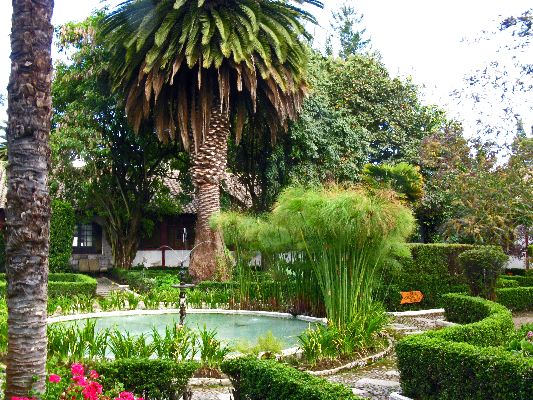
 |
|
|
|
|
A lot of the early history of the
hacienda is grime and includes the abuse and exploitation of the local
residence. But is was also a part of the development of science, culture and
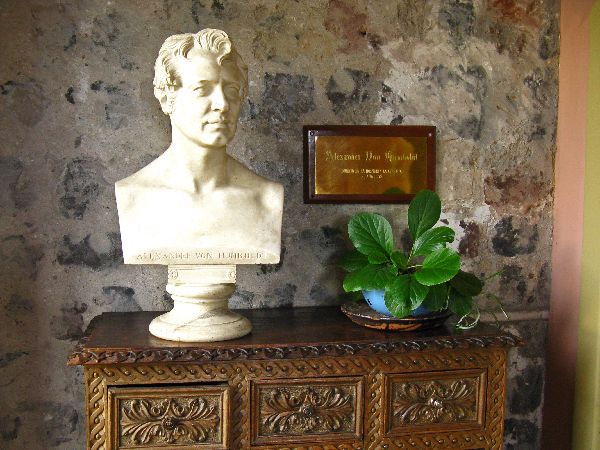
politics in the region by playing host to a number of notables. One of
these is Alexander von Humboldt (Humboldt penguin and Humboldt current start
a long list of honors and namesakes), who spent some time at the hacienda in
1802 while doing scientific study on volcanoes.
The Marques family, owners during the late colonial period, were fervent defenders of Simon Bolivar and the libertarian cause. Family members such as Manuel Matheu y Herrera, Francisco Xavier and Jose Xavier de Ascazubi were heroes of the Independence movement -- a number of activities took place within the four walls of the hacienda. The Treaty of La Cienega was signed in the hacienda. Gabriel Garcia Moreno, Leonidas Plaza Gutierrez and Jose Velasco Ibarra are Ecuadorian historical figures who have resided at the hacienda. |
||
 
|
|||
   
|
|||
 |
|||
|
"Hosted by
DreamHost - earth friendly web hosting"
|
|||
 Please
contact us
Please
contact us IBF Homepage